Summary

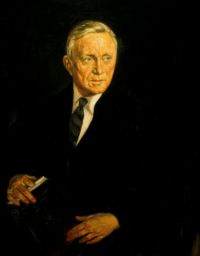
Portrait of William O. Douglas William O. Douglas Ex parte Endo — Opinion of the Court

Loyalty is a matter of the heart and mind not of race, creed, or color. He who is loyal is by definition not a spy or a saboteur. When the power to detain is derived from the power to protect the war effort against espionage and sabotage, detention which has no relationship to that objective is unauthorized.
Nor may the power to detain an admittedly loyal citizen or to grant him a conditional release be implied as a useful or convenient step in the evacuation program, whatever authority might be implied in case of those whose loyalty was not conceded or established.
Source: Wikisource

Portrait of William O. Douglas William O. Douglas Ex parte Endo — Opinion of the Court

We must assume that the Chief Executive and members of Congress, as well as the courts, are sensitive to and respectful of the liberties of the citizen. In interpreting a war-time measure we must assume that their purpose was to allow for the greatest possible accommodation between those liberties and the exigencies of war. We must assume, when asked to find implied powers in a grant of legislative or executive authority, that the law makers intended to place no greater restraint on the citizen than was clearly and unmistakably indicated by the language they used.
Source: Wikisource

Portrait of William O. Douglas William O. Douglas Ex parte Endo — Opinion of the Court

Such a basis of decision will render easy the evasion of law and the violation of constitutional rights, for when conduct is called in question the obvious response will be that, however much the superior executive officials knew, understood, and approved the conduct of their subordinates, those subordinates in fact lacked a definite mandate so to act. It is to hide one's head in the sand to assert that the detention of relator resulted from an excess of authority by subordinate officials.
Source: Wikisource

Get perspective with Kwize: daily news enlightened by great literature