Summary

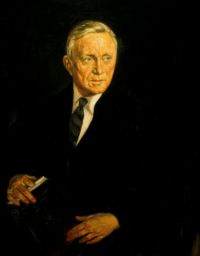
Portrait of William O. Douglas William O. Douglas Francis v. Southern Pacific Company…

This Court has itself recognized and acted on the fact that it is the law of Utah that 'when a common carrier accepts a person as a passenger, he is not permitted to deny that he owes to him the duty of diligence, prudence, and skill which, as carrying on a public employment, he owes to all his passengers, and that he cannot escape liability for a negligent performance of that duty, resulting in injury, by urging that the pass or commission was issued, or the gratuitous carriage permitted by him, in violation of law.' Southern Pac.
Source: Wikisource

Portrait of William O. Douglas William O. Douglas Francis v. Southern Pacific Company…

When precedent and precedent alone is all the argument that can be made to support a court-fashioned rule, it is time for the rule's creator to destroy it.
The Van Zant case did hold that since the Hepburn Act the 'incidents and consequences' of an employee's pass raised a federal question. It then held that the user of an employee's pass must stand by his contract to assume the risks of negligent injury by the railroad.
Source: Wikisource

Portrait of William O. Douglas William O. Douglas Francis v. Southern Pacific Company…

Congress has also emphatically outlawed all kinds of stipulations and contracts to exempt railroads from liability for their negligence in Employers' Liability Act cases. Duncan v. Thompson, 315 U.S. 1, 62 S.Ct. 422, 86 L.Ed. 575. All of this body of legislation, and much more to which reference could be made, has departed from the premise of the Adams and Boering decisions that it is more important to society that men abide by ticket and contract stipulations [8] than it is to have a system which provides compensation for the industrially injured and the dependents of those who are killed.
Source: Wikisource

Get perspective with Kwize: daily news enlightened by great literature