Summary

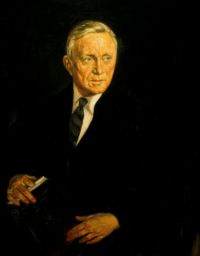
Portrait of William O. Douglas William O. Douglas General Electric Company v. Jewel Incandescent Lamp Company…

Pipkin found latent qualities in an old discovery and adapted it to a useful end. But that did not advance the frontiers of science in this narrow field so as to satisfy the exacting standards of our patent system. Where there has been use of an article or where the method of its manufacture is known, more than a new advantage of the product must be discovered in order to claim invention.
Source: Wikisource

Portrait of William O. Douglas William O. Douglas General Electric Company v. Jewel Incandescent Lamp Company…

As the first claim of the patent indicates, the characteristic feature of the patented bulb is the fact that the interior surface is 'characterized by the presence of rounded as distinguished from sharp angular crevices.' It is that feature which is responsible for the bulb's strength. Now, an electric bulb frosted on the inside was old in the art. Kennedy had disclosed such a product twenty-five years earlier. Moreover, it had long been known in the art that successive acid treatments of glass rounded out the sharp angular crevices produced by the first etching.
Source: Wikisource

Portrait of William O. Douglas William O. Douglas General Electric Company v. Jewel Incandescent Lamp Company…

And it appears that an electric bulb, which had been frosted inside pursuant to his method, would have inevitably obtained the rounded pits and hence the attendant strength characteristic of the Pipkin bulb.
If A without mentioning the element of strength patented a bulb which was extra strong, B could not obtain a patent on the bulb because of its strength, though he was the first to recognize that feature of it.
Source: Wikisource

Get perspective with Kwize: daily news enlightened by great literature