Summary

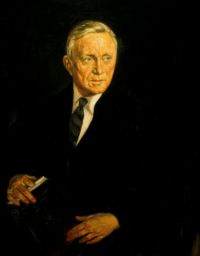
Portrait of William O. Douglas William O. Douglas Goldberg v. Whitaker House Cooperative…

There is no reason in logic why these members may not be employees. There is nothing inherently inconsistent between the coexistence of a proprietary and an employment relationship. If members of a trade union bought stock in their corporate employer, they would not cease to be employees within the conception of this Act. For the corporation would 'suffer or permit' them to work whether or not they owned one share of stock or none or many. We fail to see why a member of a cooperative may not also be an employee of the cooperative.
Source: Wikisource

Portrait of William O. Douglas William O. Douglas Goldberg v. Whitaker House Cooperative…

The management fixes the piece rates at which they work; the management can expel them for substandard work or for failure to obey the regulations. The management, in other words, can hire or fire the homeworkers. Apart from the other considerations we have mentioned, these powers make the device of the cooperative too transparent to survive the statutory definition of 'employ' and the Regulations governing homework.
Source: Wikisource

Portrait of William O. Douglas William O. Douglas Goldberg v. Whitaker House Cooperative…

Still later respondent was organized; and, as we have said, it made no attempt to comply with these homework regulations.
We think we would be remiss, in light of this history, if we construed the Act loosely so as to permit this homework to be done in ways not permissible under the Regulations. By § 3 (d) of the Act an 'employer' is any person acting 'in the interest of an employer in relation to an employee.' By § 3 (e) an 'employee' is one 'employed' by an employer.
Source: Wikisource

Get perspective with Kwize: daily news enlightened by great literature