Summary

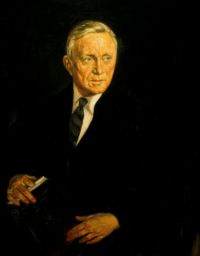
Portrait of William O. Douglas William O. Douglas International Ladies' Garment Workers' Union v…

To hold the contract void as to the union's voluntary members seems to me to go beyond the competency of the Board under the Act and to be unsupported by any principle of contract law. Certainly there is no principle of justice or fairness with which I am familiar that requires these employees to be stripped of the benefits they acquired by the good-faith bargaining of their designated agent. Such a deprivation gives no protection to the majority who were not members of the union and arbitrarily takes from the union members their contract rights.
Source: Wikisource

Portrait of William O. Douglas William O. Douglas International Ladies' Garment Workers' Union v…

I agree that, under the statutory scheme, a minority union does not have the standing to bargain for all employees. That principle of representative government extends only to the majority. But where there is no majority union, I see no reason why the minority union should be disabled from bargaining for the minority of the members who have joined it.
Source: Wikisource

Portrait of William O. Douglas William O. Douglas International Ladies' Garment Workers' Union v…

Long before the Wagner Act, employers and employees had the right to discuss their problems. In the early days the unions were representatives of a minority of workers. [2] The aim-at least the hope- of the legislation was that majority unions would emerge and provide stabilizing influences. Yet I have found nothing in the history of the successive measures, starting with the Wagner Act, that indicates any purpose on the part of Congress to deny a minority union the right to bargain for its members when a majority have not in fact chosen a bargaining representative.
Source: Wikisource

Get perspective with Kwize: daily news enlightened by great literature