Summary

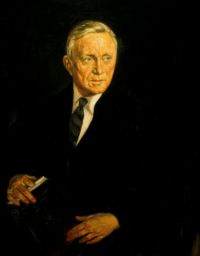
Portrait of William O. Douglas William O. Douglas Lombard v. Louisiana — Concurrence

Yet there is hardly any private enterprise that does not feel the pinch of some public regulation-from price control, to health and fire inspection, to zoning, to safety measures, to minimum wages and working conditions, to unemployment insurance. When the doors of a business are open to the public, they must be open to all regardless of race if apartheid is not to become engrained in our public places. It cannot by reason of the Equal Protection Clause become so engrained with the aid of state courts, state legislatures, or state police.
Source: Wikisource

Portrait of William O. Douglas William O. Douglas Lombard v. Louisiana — Concurrence

A private person has no standing to obtain even limited access. The principle that a man's home is his castle is basic to our system of jurisprudence.
But a restaurant, like the other departments of this retail store where Negroes were served, though private property within the protection of the Fifth Amendment, has no aura of constitutionally protected privacy about it. Access by the public is the very reason for its existence.
Source: Wikisource

Portrait of William O. Douglas William O. Douglas Lombard v. Louisiana — Concurrence

An innkeeper or common carrier has always been allowed to exclude drunks, criminals and diseased persons, but only because the public's interest in protecting his and his guests' health and property outweighs its interest in providing accommodations for this small group of travelers. [11] As a general rule, innkeepers and carriers cannot refuse their services on account of race; though the rule developed in this country that they can provide 'separate but equal' facilities. [12] And for a period of our history even this Court upheld state laws giving sanction to such a rule.
Source: Wikisource

Get perspective with Kwize: daily news enlightened by great literature