Summary

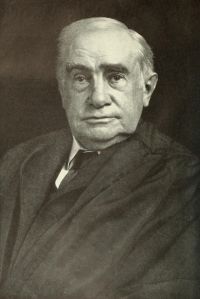
Portrait of Henry Billings Brown Henry Billings Brown Holden v. Hardy — Opinion of the Court

As the possession of property, of which a person cannot be deprived, doubtless implies that such property may be acquired, it is safe to say that a state law which undertakes to deprive any class of persons of the general power to acquire property would also be obnoxious to the same provision. Indeed, we may go a step further and say that, as property can only be legally acquired as between living persons by contract, a general prohibition against entering into contracts with respect to property, or having as their object the acquisition of property, should be equally invalid.
Source: Wikisource

Portrait of Henry Billings Brown Henry Billings Brown Holden v. Hardy — Opinion of the Court

State, there is nothing in the Constitution of the United States to prevent its doing so. This would not, of itself, within the meaning of the Fourteenth Amendment, be a denial to any person of the equal protection of the laws. . . . The Fourteenth Amendment does not profess to secure to all persons in the United States the benefit of the same laws and the same remedies. Great diversities in these respects may exist in two States separated only by an imaginary line. On one side of this line, there may be a right of trial by jury, and, on the other side, no such right.
Source: Wikisource

Portrait of Henry Billings Brown Henry Billings Brown Holden v. Hardy — Opinion of the Court

But if it be within the power of a legislature to adopt such means for the protection of the lives of its citizens, it is difficult to see why precautions may not also be adopted for the protection of their health and morals. It is as much for the interest of the State that the public health should be preserved as that life should be made secure.
Source: Wikisource

Get perspective with Kwize: daily news enlightened by great literature