Summary

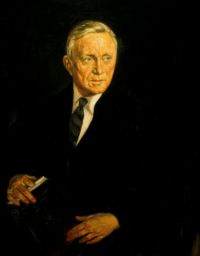
Portrait of William O. Douglas William O. Douglas Stevens v. Marks Stevens — Opinion of the Court

It is common ground that petitioner cannot be jailed for refusing to incriminate himself unless either he waived his federal privilege against self-incrimination, or immunity adequate to offset that privilege was conferred upon him. Taking up the first possibility-waiver of the privilege against self-incrimination-it seems to me evident that petitioner was never asked to sign, nor did he sign, a waiver of that privilege.
Source: Wikisource

Portrait of William O. Douglas William O. Douglas Stevens v. Marks Stevens — Opinion of the Court

New York has the very deepest interest in uprooting and punishing misconduct by its officials; it also has a narrower interest in having an investigation, commenced on the premise of a waiver, not suddenly balked by the witness' change of heart. It seems to me there is no federal constitutional reason why a witness who has properly given a voluntary waiver either of his privilege or his immunity should not be held to it.
Source: Wikisource

Portrait of William O. Douglas William O. Douglas Stevens v. Marks Stevens — Opinion of the Court

He asserted his desire to withdraw the waiver immediately upon returning before the grand jury.↑ The suggestion that we should remand the case to the New York courts for a finding of whether or not petitioner was misled is, we think, wide of the mark. A State must affirmatively demonstrate to the witness that a valid immunity from prosecution is his before it may hold him in contempt for refusing to answer questions that would otherwise be incriminating.
Source: Wikisource

Get perspective with Kwize: daily news enlightened by great literature