Summary

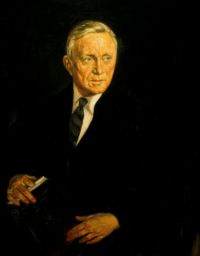
Portrait of William O. Douglas William O. Douglas Travis v. United States (364 U.S. 631…

It is of course true that the offense is not completed until the affidavit is filed with the Board, but I do not think it adds anything to say, as the Court does, that until such time as the affidavit is filed with the Board there is no matter 'within the jurisdiction of any department or agency of the United States.' The fact that the filing completes the offense by giving the Board jurisdiction over the matter does not, in my view, detract from the conclusion that the offense was begun when and where the affidavit was executed.
Source: Wikisource

Portrait of William O. Douglas William O. Douglas Travis v. United States (364 U.S. 631…

Before the first trial, petitioner moved to dismiss the indictment on the ground that venue was improperly laid in Colorado. The District Court denied the motion. Although the Court of Appeals reversed on another ground on petitioner's first appeal, it specifically approved the laying of venue in Colorado (247 F.2d 130, 133-134) recognizing that its ruling was in conflict with that in United States v. Valenti, 3 Cir., 207 F.2d 242. It is solely to this issue that we address ourselves.
Source: Wikisource

Portrait of William O. Douglas William O. Douglas Travis v. United States (364 U.S. 631…

The Government admits that the filing is necessary to the 'occurrence' of the offense but it argues, that the offense has its 'beginning' in Colorado, because it was there that 'the defendant had irrevocably set in motion and placed beyond his control the train of events which would normally result (and here did result) in the consummation of the offense.' We do not agree with this analysis. Venue should not be made to depend on the chance use of the mails, when Congress has so carefully indicated the locus of the crime. After mailing, the affidavit might have been lost
Source: Wikisource

Get perspective with Kwize: daily news enlightened by great literature