Summary

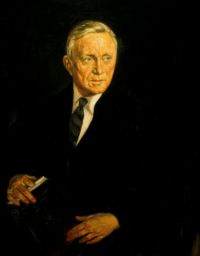
Portrait of William O. Douglas William O. Douglas Ullmann v. United States — Dissent

The critical point is that the Constitution places the right of silence beyond the reach of government. The Fifth Amendment stands between the citizen and his government. When public opinion casts a person into the outer darkness, as happens today when a person is exposed as a Communist, the government brings infamy on the head of the witness when it compels disclosure.
Source: Wikisource

Portrait of William O. Douglas William O. Douglas Ullmann v. United States — Dissent

The guarantee is that no person 'shall be compelled in any criminal case to be a witness against himself.' The majority does not enforce that guarantee as written but qualifies it; and the qualification apparently reads, 'but only if criminal conviction might result.' Wisely or not, the Fifth Amendment protects against the compulsory self-accusation of crime without exception or qualification.
Source: Wikisource

Portrait of William O. Douglas William O. Douglas Ullmann v. United States — Dissent

Oppression occurs when infamy is imposed on the citizen by the State. The French jurist, Brissot de Warville, wrote in support of Beccaria's position, 'It is in the power of the mores rather than in the hands of the legislator that this terrible weapon of infamy rests, this type of civil excommunication, which deprives the victim of all consideration, which severs all the ties which bind him to his fellow citizens, which isolates him in the midst of society.
Source: Wikisource

Get perspective with Kwize: daily news enlightened by great literature