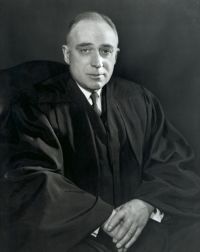
John Marshall Harlan II

John Marshall Harlan II

Summary

Portrait of John Marshall Harlan II John Marshall Harlan II California v. Byers — Concurrence

The premise of the criminal sanction-and the disgrace that goes with it-is that it is more feared than the mere censure of our fellow members of society; although communal living requires us to be willing to disclose much to the government and our fellow citizens about our private affairs-and although the fear of eventually having to disclose operates as an inhibiting factor on our personal lives-it still makes sense to think of the Fifth Amendment as intended at least in part to relieve us of the very particular fear arising from the imposition of criminal sanctions.
Source: Wikisource

Portrait of John Marshall Harlan II John Marshall Harlan II California v. Byers — Concurrence

Technological progress creates an ever-expanding need for governmental information about individuals. If the individual's ability in any particular case to perceive a genuine risk of self-incrimination is to be a sufficient condition for imposition of use restrictions on the government in all self-reporting contexts, then the privilege threatens the capacity of the government to respond to societal needs with a realistic mixture of criminal sanctions and other regulatory devices.
Source: Wikisource

Portrait of John Marshall Harlan II John Marshall Harlan II California v. Byers — Concurrence

For if the privilege is truly a personal one, and the central standard is the presence of 'real' as opposed to 'imaginary' risks of self-incrimination, such general empirical differences can only function as evidentiary indicia in assessing the particular individual's claim, in all the circumstances of his particular case, that if he were to comply with the reporting requirement he would run a genuine risk of incrimination.
Source: Wikisource

Get perspective with Kwize: daily news enlightened by great literature