Summary

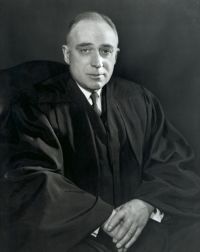
Portrait of John Marshall Harlan II John Marshall Harlan II Mackey v. United States (401 U.S. 667…

I continue to believe that a proper perception of our duties as a court of law, charged with applying the Constitution to resolve every legal dispute within our jurisdiction on direct review, mandates that we apply the law as it is at the time, not as it once was. Inquiry into the nature, purposes, and scope of a particular constitutional rule is essential to the task of deciding whether that rule should be made the law of the land.
Source: Wikisource

Portrait of John Marshall Harlan II John Marshall Harlan II Mackey v. United States (401 U.S. 667…

We sit as a court of law, not a council of revision. Our powers of judicial review are judicial, not legislative, in nature. The assertion that this evidence is relevant data for resolving the problems at hand serves at best only to make explicit that which I have attempted to demonstrate in Part I of this opinion-that the retroactivity analysis currently ascendant in this Court proceeds on the false and unacceptable premise that constitutional interpretation is not purely a judicial, but, rather, something akin to a legislative, process.
Source: Wikisource

Portrait of John Marshall Harlan II John Marshall Harlan II Mackey v. United States (401 U.S. 667…

No one, not criminal defendants, not the judicial system, not society as a whole is benefited by a judgment providing a man shall tentatively go to jail today, but tomorrow and every day thereafter his continued incarceration shall be subject to fresh litigation on issues already resolved.
A rule of law that fails to take account of these finality interests would do more than subvert the criminal process itself. It would also seriously distort the very limited resources society has allocated to the criminal process.
Source: Wikisource

Get perspective with Kwize: daily news enlightened by great literature