Summary

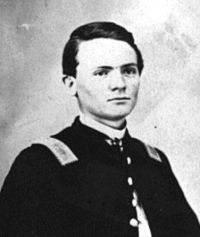
Portrait of Wilson J. Vance Wilson J. Vance Stone's River: The Turning-Point of the Civil War

The armies that were soon to measure strength in Middle Tennessee were not strangers. They had raced with each other to the banks of the Ohio in the previous fall, they had confronted each other,—at times,—in fractional strength upon a score of fields. It was the advance division of the Army of the Ohio, which had checked the Confederate onset on the first day at Shiloh, where Grant was all but overwhelmed, and that command, in full strength, had done its share in driving the gray-clad battalions from the field the next day.
Source: Gutenberg

Portrait of Wilson J. Vance Wilson J. Vance Stone's River: The Turning-Point of the Civil War

The Confederate infantry now pressed forward in a frenzy of enthusiasm. The piercing “rebel yell” rose triumphantly above the roar of cannon and the bark of musketry, and many [Pg 51] regiments pressed clear to the borders of the cedars in which the Union troops were posted, before they had to retire from a merciless fire.
Again and again Hardee and Cheatham brought their men to the charge. The exigencies of the battle twisted the Union line into strange shapes. Here a brigade was in a half-circle with a concave side to the enemy; another presented a convex front to attack.
Source: Gutenberg

Portrait of Wilson J. Vance Wilson J. Vance Stone's River: The Turning-Point of the Civil War

The outbreak of hostilities between the North and the South was greeted with obvious delight by the majority of public journals, and with thinly veiled satisfaction by many of the public officials of the more important nations of Europe. Russia, indeed, showed a substantial and potent friendship for the United States, and Italy,—where the movement for liberal institutions had already won important victories,—evinced a sympathy both general and genuine.
Source: Gutenberg

Get perspective with Kwize: daily news enlightened by great literature