Middle Tennessee

Definition and stakes

Various,  Trotwood's Monthly, Vol. II, No… (1905)

“ It is a typical road of Middle Tennessee—for all of Middle Tennessee is a rich loam lying on limestone. The rocks have been beaten into pikes and the gray-white roads pencil the distant slope or fade away into the gentle valleys. Around, everywhere, is the typical Southern home, the Southern farm of the grain and stock raising kind.
This sketch is not a story of the life of Andrew Jackson. That were impossible in a short article. We have books and books on his life and character. Every school boy knows his history, the poverty of its beginning, the honor of its end.
”

Source: Gutenberg

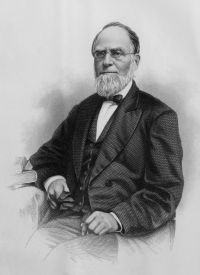
Portrait of John Randolph Neal John Randolph Neal,  Disunion and Restoration in Tennessee

“ When the State was admitted into the Union, in 1796, her population was homogeneous. The institution of slavery existed in all sections of the State.
In West and Middle Tennessee, where the soil and climate were suitable for raising cotton, slave labor was very profitable. In East Tennessee, the poor upland farms scarcely yielded a return to white labor. As the result of this difference in natural conditions, slavery flourished in West and Middle Tennessee, but in East Tennessee, by 1860, it had become almost extinct, except upon the rich plantations that bordered the Tennessee River.
”
Source: Gutenberg

Get perspective with Kwize: daily news enlightened by great literature