Amazonas

Definition and stakes

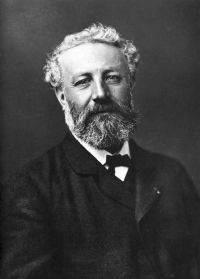
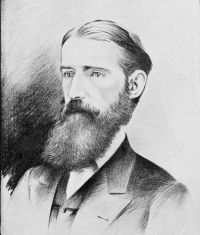
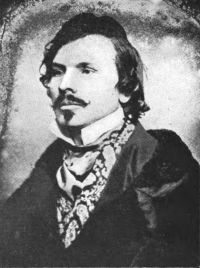
Portrait of Henry Walter Bates Henry Walter Bates,  The Naturalist on the River Amazons

“ The Brazilians have lately taken to applying the convenient term Alto Amazonas (High or Upper Amazons) to the Solimoens, and it is probable that this will gradually prevail over the old name. The Rio Negro broadens considerably from its mouth upwards, and presents the appearance of a great lake; its black-dyed waters having no current, and seeming to be dammed up by the impetuous flow of the yellow, turbid Solimoens, which here belches forth a continuous line of uprooted trees and patches of grass, and forms a striking contrast with its tributary. ”
Source: Gutenberg

The New International Encyclopædia…

“ The climate, although hot, is not unhealthful, and the soil is very fertile. Industrially, the State is very little developed, and its principal articles of trade are food products. With an area three and a half times as large as that of France, an abundance of fertile land, and excellent waterways, Amazonas had (1900) a population of 207,600, or less than one inhabitant for three square miles. Capital, Manãos, which is also the chief port. Amazonas formed a part of the State of Pará, and was constituted a separate State in 1850. ”
Source: Wikisource

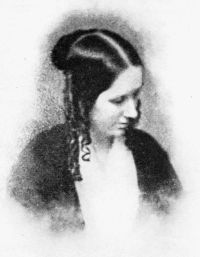
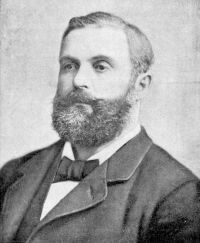
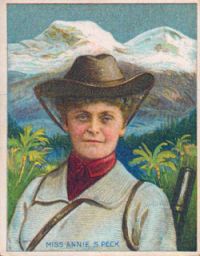
Portrait of Annie S. Peck Annie S. Peck,  Industrial and commercial South America (1922)

“ Amazonas, first of the inland States, and the largest of all, has Colombia and Venezuela north, Pará east, Matto Grosso, Bolivia, and Acre south, and Peru and Colombia west. Its area is equal to that of our three Pacific Coast States with Idaho, Montana, Nevada, and Colorado. In this great space the population, estimated at 435,000, is about one person to 11⁄2 square miles. Manaos, the capital, and the various other centres of population by the river side mean rubber. ”
Source: Gutenberg

Get perspective with Kwize: daily news enlightened by great literature