Army of the Rhine

Definition and stakes

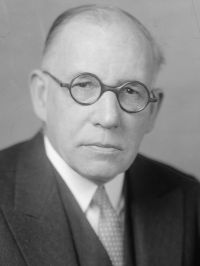
Portrait of Carlton J. H. Hayes Carlton J. H. Hayes A Political and Social History of Modern Europe V.1

When the Directory assumed office, France was still at war with Austria, Sardinia, and Great Britain. The general plan of campaign was to advance one French army across the Rhine, through southern Germany, and thence into the Austrian dominions, and to dispatch another army across the Alps, through northern Italy, and thence on to Vienna. Of the army of the Rhine such veteran generals as Pichegru, Jourdan, and Moreau were put in charge. To the command of the army operating in Italy, the young and inexperienced Bonaparte was appointed.
Source: Gutenberg

John C. Hutcheson Fritz and Eric

Be that as it may, however, during this interval of inactivity, when the shattered fragments of the magnificent French army—which had so proudly assumed the offensive but a bare fortnight before along the frontiers of the Rhine—were idling away precious moments that were fraught with peril and disaster to the Gallic race, the huge German masses, animated by a sense of victory and the consciousness of a superiority in arms as well as in numbers, were sweeping forward like a whirlwind of destruction.
Source: Gutenberg

Graf von Helmuth Moltke The Franco-German War of 1870-71

One Division of the French Army was ordered to the Spanish frontier as a corps of observation; only such troops as were absolutely necessary were left in Algiers and in Civita Vecchia; Paris and Lyons were sufficiently garrisoned. The entire remainder of the army: 332 battalions, 220 squadrons, 924 guns, in all about 300,000 men, formed the Army of the Rhine, which, divided into eight Corps, was, at any rate in the first instance, to be under the sole direction of a central head.
Source: Gutenberg

Get perspective with Kwize: daily news enlightened by great literature