“ Dear, dear Aunt Kate! She was an odd, quick-tempered old lady, cantankerous at times; but how warm-hearted, how just and generous, how good to me, even when I did not care to please her! When one is a wife, and especially when one is a mother, all other relationships lose their binding power; but still I could not help crying for a little while over the loss of Aunt Kate. ”
Aunt Kate
Definition and stakes
The theme of “Aunt Kate” has been addressed by authors such as Charlotte M. Yonge, Henry James, Charlotte M. Vaile, E. Nesbit and Charles Dickens. It is often associated with terms like Kitty, Maud, Barbara, uncle and family.
Quotes about “Aunt Kate”
 Susan Glaspell,
The Visioning: A Novel
“ Suddenly Aunt Kate's face grew pink and she sat straight. "Worth, was this one of the men?""Oh no, Aunt Kate. He's not one of the men. He's just a man. He's the man that mends the boats.""'The man that mends the boats!' He sounds like a creature in flowing robes out of a mythology book, or the being expressing the high and noble sentiments calling everybody down in a new-thoughtish play." ”
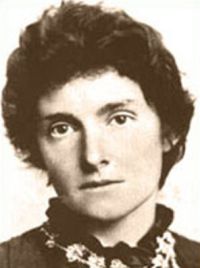 E. Nesbit,
Man and Maid — VII. The Aunt and the Editor
(1906)
“ THE AUNT AND THE EDITOR Aunt Kate was the great comfort of Kitty’s existence. Always kindly, helpful, sympathetic, no girlish trouble was too slight, no girlish question too difficult for her tender heart—her delicate insight. How different from grim Aunt Eliza, with whom it was Kitty’s fate to live. Aunt Eliza was severe, methodical, energetic. In household matters she spared neither herself nor her niece. Kitty could darn and mend and bake and dust and sweep in a way which might have turned the parents of the bluest Girtonian green with envy. ”
 James Joyce,
Dubliners
(1914)
“ Aunt Julia was an inch or so the taller. Her hair, drawn low over the tops of her ears, was grey; and grey also, with darker shadows, was her large flaccid face. Though she was stout in build and stood erect, her slow eyes and parted lips gave her the appearance of a woman who did not know where she was or where she was going. Aunt Kate was more vivacious. Her face, healthier than her sister's, was all puckers and creases, like a shrivelled red apple, and her hair, braided in the same old-fashioned way, had not lost its ripe nut colour. They both kissed Gabriel frankly. ”
 Charlotte M. Yonge,
Countess Kate
“ Uncle Giles took her down stairs; and when they were in the carriage, in the dark, he seemed to be less shy: he lifted her on his knee and said, “I will talk to your aunt, and we will see how soon you can come to us, my dear.”“Oh, do let it be soon,” said Kate.“That must depend upon your Aunt Barbara,” he answered, “and upon law matters, perhaps. And you must not be troublesome to her; she has suffered very much, and will not think of herself, so you must think for her.”“I don’t know how, Uncle Giles,” said poor sincere Kate. “At home, they always said I had no consideration.” ”
 Ada Cambridge,
In two years' time, Vol. I (of 2…
(1879)
“ Here is the family party, on its way to dinner:—First in order, next to mother and uncle Groodeve, is dear aunt Kate, with her gentle face like Eleanor’s, her soft grey hair, her soft grey dress—less like father in some ways than aunt Alice, but with more of his genial frankness in her kind [Pg 208] eyes. A very pretty woman she must have been when she was young; even now she has a certain bloom and brightness in her fair faded face that is very winning to me, expressing, as it clearly does, a warm, and loving, and sympathetic nature. ”
Charlotte M. Yonge,
Countess Kate
“ It may be doubted whether Countess Kate ever did in her childhood discover what her Aunt Barbara meant by the natural consequences of her folly, but she suffered from them nevertheless. When the summer was getting past its height of beauty, and the streets were all sun and misty heat, and the grass in the parks looked brown, and the rooms were so close that even Aunt Jane had one window open, Kate grew giddy in the head almost every morning, and so weary and dull all day that she had hardly spirit to do anything but read story-books. ”
Charlotte M. Yonge,
Countess Kate
“ Meantime, I desire that your Aunt Jane may be spared hearing of this affair, little as you seem to care for her peace of mind.”And away went Lady Barbara; while Kate, flinging herself upon the sofa, sobbed out, “I do care for Aunt Jane! I love Aunt Jane! I love her ten hundred times more than you! you horrid cross old Diana! But I have deceived! Oh, I am getting to be a wicked little girl! I never did such things at home. Nobody made me naughty there. But it’s the fashionable world. It is corrupting my simplicity. It always does. And I shall be lost! O Mary, Mary! O Papa, Papa! ”
 Kathleen Thompson Norris,
The Beloved Woman
“ One night, when Wolf was in Philadelphia, Chris took her to the opera again, duly returning her to Aunt Kate at half-past eleven, and politely disclaiming Aunt Kate's gratitude for his goodness to little Norma.He never attempted to touch her, to kiss her; he never permitted himself an affectionate term, or a hint of the passion that enveloped him; they were friends, that was all, and surely, surely, they told themselves, a self-respecting man and woman may be friends—may talk and walk and lunch together, and harm no one? ”
 Nora Perry,
A Flock of Girls and Boys
“ Uncle John's and Aunt Kate's assurance of regard was one thing, but Uncle John and Aunt Kate were not the girls, and poor Ally was quite sure that no one of them had ever cared very much for her, though Mary had alternately petted and laughed at her, and now—why, now, they might dislike her for making such a fuss, for Laura had often said she did dislike people so who made a fuss, and Maud would agree with Laura, and Mary would laugh at her more than ever. ”
“ Would this middle-aged lady—an aunt beyond doubt—an aunt who so long had played a double rôle, assume, now that one rôle must be chosen, the part of Aunt Eliza the Terrible or of Aunt Kate the Kind? The aunt was dumb. Kitty was dumb. But the editor had his wits about him, and Kate, though shaken, was not absolutely paralysed.“It’s almost too good to be true,” he said, “that my Aunt Kate is really your Aunt Eliza. Aunt Kate, Kitty and I have just decided that we can’t do without each other. I am so glad that you are the first to wish us joy.” ”
Charlotte M. Yonge,
Countess Kate
“ But Kate esteemed it a great holiday, when, as sometimes happened, Aunt Barbara went out to spend the evening with some friends; and she, under promise of being very good, used to be Aunt Jane’s companion.Those were the times when her tongue took a holiday, and it must be confessed, rather to the astonishment and confusion of Lady Jane.“Aunt Jane, do tell me about yourself when you were a little girl?”“Ah! my dear, that does not seem so very long ago. Time passes very quickly. To think of such a great girl as you being poor James’s grandchild!” ”
Susan Glaspell,
The Visioning: A Novel
“ Again Katie looked up. The girl, holding the puppy close, was looking at the little boy. Something long beaten back seemed rushing on; and in her eyes was the consciousness of its having been long beaten back.Something of which did not escape the astute Wayne the Worthy. "Aunt Kate," he called excitedly, "Aunt Kate—Miss Ann's eyes go such a long way down!""Worth, I'm not at all sure that it is the best of form for a grown-up young gentleman of six summers to be audibly estimating the fathomless depths of a young woman's eyes. ”
Various, Harper's Young People, April 19…
“ He can neither see nor hear." [Pg 397] "Then he must be dead," said George."No, not dead; there remains a spark of life in the little dried-up body. By-and-by, when the right time comes, you will see him burst out of that shroud and coffin, but not as an ugly caterpillar: he will be a beautiful butterfly with lovely wings.""Why, Aunt Kate!" they both exclaimed, in surprise.But Aunt Kate was standing with a dreamy, far-away look in her blue eyes, and a soft sweet smile on her lips. George said she looked as though she saw the air full of beautiful butterflies. ”
Charlotte M. Yonge,
Countess Kate
“ Helpless girl as she was, she would be as brave as the knights and earls her ancestors, and stand up for the truth. But what would they do at her! Oh! could she bear Aunt Barbara’s dreadful set Diana face again, and not write as she was told!The poor weak little heart shrank with terror as she only looked at Aunt Barbara’s chair—not much like the Sir Giles de Umfraville she had thought of just now. “And I’m naughty now; I did betray my trust: I’m much naughtier than I was. Oh, if Papa was but here!” And then a light darted into Kate’s eye, and a smile came on her lip. ”
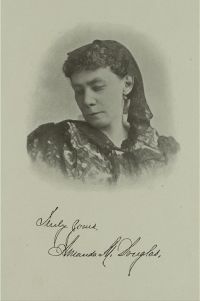 Amanda M. Douglas,
The Girls at Mount Morris
“ She’s sweet and gay and loving and I suppose we’ve all spoiled her. Aunt Kate thinks she’s the loveliest thing in the world, and she has just devoted her life to the child. Aunt Kate is as good as gold, a stickler for some things and she’s always been splendid to mother. But she’s great on family. She can’t cry you down, because you belong to us.”“But I’ve been on the other side all my life, and—” yes, she would say this—“Mrs. Boyd’s health was so broken that if it had not been for Mrs. Barrington’s kind offer I must 259have given up school and gone into a factory ”
 Susanna Moodie,
The Monctons: A Novel. Volume 1…
“ The charming Kate tenderly kissed her weeping relative, and assured her that she could realize it all—that she must not fret, for she was quite herself again—not even hurt; only frightened a little. And then she turned her lovely face to me, on which a tear rested, like a dew-drop upon the heart of a rose, with such a sweet, arch smile, as she said, "My aunt is very nervous, and is so fond of me that her fears for my safety have quite upset her. The sooner we get her home the better. Will you be so kind, Sir, as to tell me if a carriage is at the door. Ours is blue, with white horses." ”
E. Nesbit,
Man and Maid — VII. The Aunt and the Editor
(1906)
“ I love to help my girls.” So Kitty wrote quite freely, and as honestly as any girl of eighteen ever writes: her hopes and fears, her household troubles, her literary ambitions. And in the columns of the Girls’ Very Own Friend Aunt Kate replied with all the tender grace and delightful warmth that characterised her utterances.The idea of calling on Aunt Kate occurred to Kitty as she was “putting on her things” to go to the Guildhall. She instantly threw the plain “everyday” hat from her, and pulled her best hat from its tissue-paper nest in the black bandbox. ”
Henry James, The Wings of the Dove (1902)
“ She knew people, and people knew her, and she was the handsomest thing there—this last a declaration made by Milly, in a sort of soft mid-summer madness, a straight skylark-flight of charity, to Aunt Maud. Kate had, for her new friend's eyes, the extraordinary and attaching property of appearing at a given moment to show as a beautiful stranger, to cut her connections and lose her identity, letting the imagination for the time make what it would of them—make her merely a person striking from afar, more and more pleasing as one watched, but who was above all a subject for curiosity. ”
Henry James, The Wings of the Dove, Volume 1 of 2
“ Kate added as she picked out the frill of her little umbrella, "I don't suppose your idea of him is quite that he should persuade you to live with us." "Dear no—not a bit." He spoke as not resenting either the fear or the hope she imputed; met both imputations, in fact, with a sort of intellectual relief. "I place the case for you wholly in your aunt's hands. I take her view, with my eyes shut; I accept in all confidence any man she selects. If he's good enough for her—elephantine snob as she is—he's good enough for me ”
Charlotte M. Yonge,
Countess Kate
“ When she came down, she found her aunt—as she believed—warning her uncle against her being left to herself; and then came, “If she should be too much for Emily, only send a note, and Bartley or I will come to fetch her home.”“She wants him to think me a little wild beast!” thought Kate; but her uncle answered, “Emily always knows how to deal with children. Good-bye.”“To deal with children! What did that mean?” thought the Countess, as she stepped along by the side of her uncle, not venturing to speak, and feeling almost as shy and bewildered as when she was on the world alone. ”
E. Nesbit,
Man and Maid — VII. The Aunt and the Editor
(1906)
“ The poor girl, in her Streatham seclusion, had never before heard the “Oxford voice.”“I am very sorry,” he said, “but ‘Aunt Kate’ is not here to-day. Perhaps—is there anything I could do?”“No, thank you,” said Kitty, wishing herself miles away; the tobacco smoke choked her, the backs of the two other men seemed an outrage. She turned away with a haughty bow, and went down the grimy stairs full of fury. She could have slapped herself. How could she have been such a fool as to come there? There were feet coming down the stair behind her—she quickened her pace. The feet came more quickly. ”
Charlotte M. Yonge,
Countess Kate
“ Wardour for having brought Lady Caergwent home, and offered him some luncheon; but in such a grave grand way, that it was plain that she did not want him to eat it, and, feeling that he could do no more good, he kissed poor Kate and wished Lady Barbara good-bye.Poor Kate stood, drooping, too much constrained by dismay even to try to cling to him, or run after him to the foot of the stairs.“Now, Katharine,” said her aunt, “come up with me to your Aunt Jane’s room. She has been so much distressed about you, that she will not be easy till she has seen you.” ”
Alice B. Emerson, Ruth Fielding Down East; Or, The Hermit of Beach Plum Point
“ Tom promptly proposed.“My duty as a chaperon——” began the good woman, when her niece broke in with:“In numbers there is perfect safety, Auntie. There are a whole lot of girls down there at the Point.”“And we have chaperons of our own, I assure you,” interposed Mr. Hammond, treating Aunt Kate’s objection seriously. “Miss Loder has a cousin who always travels with her. Our own Mother Paisley, who plays character parts, has daughters of her own and is a lovely lady. You need not fear, Madam, that the conventions will be broken.”“We won’t even crack ’em, Aunt Kate,” declared Helen rouguishly. ”
Charlotte M. Vaile, Wheat and Huckleberries; Or, Dr…
“ The look in Esther’s face changed. “You don’t do Aunt Katharine justice, Kate,” she said. “Nobody does here. She isn’t hateful and hard-hearted, as you all seem to think. She’s good and kind and true—oh, so true! I believe she’d do more and give more than any other person I ever saw to bring about what she thinks is right. I don’t know, I’m sure, how she came to like me, but I know why I like her. I admire her and I love her, and there’s nobody in the world I’d rather take a favor from than Aunt Katharine.” ”
Charlotte M. Yonge,
Countess Kate
“ It is a different state of life that has been appointed for you; and you would not be allowed to make your home with me, with no older a person than Mary to manage for you. If your aunt had not been taken from us, then—” and Kate ventured to put her arm round his neck—“then this would have been your natural home; but as things are with us, I could not make my house such as would suit the requirements of those who arrange for you. And, my poor child, I fear we let the very faults spring up that are your sorrow now.”“Oh no, no, Papa, you helped me! Aunt Barbara only makes me—oh! ”
Charlotte M. Yonge,
Countess Kate
“ Kate flung away into the schoolroom, muttering, and in a tumult of exceeding disappointment, anger, and despair, too furious even to cry, and dashing about the room, calling Aunt Barbara after every horrible heroine she could think of, and pitying herself and her friends, till the thought of Sylvia’s disappointment stung her beyond all bearing. ”
A. Maynard Barbour, At the Time Appointed
“ And if to Kate the summer seemed suddenly to have lost its glory and music, if she found the round of social pleasures on which she had just entered grown strangely insipid, if it sometimes seemed to her that she had quaffed all the richness and sweetness of life on that wondrous first night till only the dregs remained, she gave no sign. With her sunny smile and lightsome ways she reigned supreme, both in society and in the home, and none but her aunt and Darrell missed the old-time rippling laughter or noted the deepening wistfulness and seriousness of the fair young face. ”
Related terms
Authors who wrote about “Aunt Kate”
Charlotte M. YongeHenry JamesCharlotte M. VaileE. Nesbit Charles Dickens
 Jane Austen
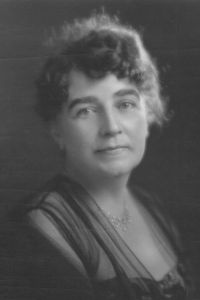 Gene Stratton-PorterNora PerryMaria Elizabeth Budden
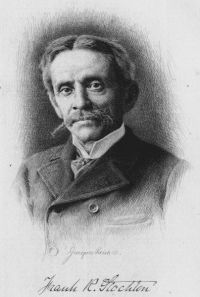 Frank R. Stockton
 Mrs. Oliphant
 Anthony TrollopeScian DubhA. Maynard Barbour
 Marcel Proust
 Louisa May Alcott
 Sarah Orne JewettNina Rhoades
 Jerome K. Jerome
 Eleanor H. Porter
