
“ For to own a bit of soil, and to be called Baas—master—by the hamlet round, is to have achieved the highest ideal of a Flemish peasant; and the old soldier, who had wandered over all the earth in his youth, and had brought nothing back, deemed in his old age that to live and die on one spot in contented humility was the fairest fate he could desire for his darling. ”
Baas
Definition and stakes
The theme of “Baas” has been addressed by authors such as H. Rider Haggard, Ouida, Cynthia Stockley, Sol. T. Plaatje and Gilbert Parker. It is often associated with terms like people, river, indigenous, bay and Baháʼí.
Quotes about “Baas”
True Stories of the Great War, Volume 6…
“ The Baas was a man from the Province of Liège, and he preferred to speak French with me rather than Flemish. He had, too, a Walloon lightness [232] of wit which went sometimes incongruously with his heavy frame, as when he said to me once when we were debating the joys of youth versus age, "To be old has its advantages, monsieur. One can then be virtuous, and it is not hard.""There is a soul in trees," he repeated. "All together the trees have a soul. A forest is one spirit. These trees are old men and old women, very patient and kindly and sluggish of blood. ”
Cynthia Stockley, Wild Honey: Stories of South Africa
“ That must be old Johannes de Beer’s, the transport rider’s place, yes! I heered he had come to live about here, but he won’t be no good to us, Baas. A slegte kerel! Says he hates the rooi-neks and would like to shoot them like schelm wherever he meets them on the veld.”“Ah! What part is he from?”“The Transvaal, Baas. But he’s different from other Boers. He lived in Delagoa Bay when he was a young kerel and went a trek once on a Portuguese gunboat and learnt a lot of slegte ways from these dago sailors. ”
Sol. T. Plaatje, Native Life in South Africa
“ This much involved tale incidentally conveys the idea that the Baas was himself getting too rich on his farm. For the Native provides his own seed, his own cattle, his own labour for the ploughing, the weeding and the reaping, and after bagging his grain he calls in the landlord to receive his share, which is fifty per cent of the entire crop. ”
 Gilbert Parker,
The Judgment House
Gilbert Parker,
The Judgment House
“ With a cry Jasmine staggered to her feet. Ian Stafford was beside her in an instant. "The Baas—the Baas!" said Krool, insistently, painfully. "I have the horses—come." CHAPTER XIV THE BAAS There had been an explosion in the Glencader Mine, and twenty men had been imprisoned in the stark solitude of the underground world. Or was it that they lay dead in that vast womb of mother-earth which takes all men of all time as they go, and absorbs them into her fruitful body, to produce other men who will in due days return to the same great mother to rest and be still? ”
Luna May Ennis, Our Little Boer Cousin
“ Dirk surely must be here! Keep in the shadow of the trees. Everything depends upon our not being seen.""Yes, Baas," answered Mutla somewhat nervously, as they began to wend their way through the city of two hundred or more armed kraals arranged in several great circles—one lying within the other like so many great garlands spread over the grass. Shields and spears were everywhere stuck into the thatch of the numerous large beehive-like huts made of wattles or poles, the upper ends of which were bent over and lashed together with a strong vine called "monkey-rope." ”
 H. Rider Haggard,
The Ivory Child
H. Rider Haggard,
The Ivory Child
“ I think, Baas, that it is the devil wearing the shape of an elephant, at least that is what she said. Now the sultan is a worshipper of the god that dwells in the elephant Jana” (here I positively whistled) “and so are most of the people, indeed all those among them who are black. For once far away in the beginning the Kendah were two peoples, but the lighter-coloured people who worshipped the Child came down from the north and conquered the black people, bringing the Child with them, or so I understood her, Baas, thousands and thousands of years ago when the world was young. ”
H. Rider Haggard,
The Ivory Child
“ I think also that the Baas would do well not to take too many men, who make marching slow, only a wagon or two and some drivers which might be sent back when they can go no farther. From Zululand messengers can be dispatched to the Mazitu, who love you, and Bausi or whoever is king there to-day will order bearers to meet us on the road, until which time we can hire other bearers in Zululand. The old woman at Beza-Town told me, moreover, as you will remember, that the Kendah are a very great people who live by themselves and will allow none to enter their land, which is bordered by deserts. ”
“ We were sore afraid, for the white baas told us he was bewitched, and that if harm came to either he would uncover the closed eye of the great inkoos upon his chest, which was the Evil Eye, and command him to blast the Barotse and their land for ever."So the white men were suffered to come and go in peace, for we dreaded the Evil Eye of the great inkoos. They toiled, these white baases, digging in the hillside and searching the riverbed; and then one day it came to pass that they quarrelled and fought, and the baas with the pictures was slain. ”
H. Rider Haggard,
She and Allan
“ On we trekked, our road still sloping slightly down hill, till at length we saw far away a vast sea of bush-veld which, as I guessed correctly, must fringe the great Zambesi River. Moreover we, or rather Hans, whose eyes were those of a hawk, saw something else, namely buildings of a more or less civilised kind, which stood among trees by the side of a stream several miles on this side of the great belt of bush. “Look, Baas,” said Hans, “those wanderers did not lie; there is the house of the white man. ”
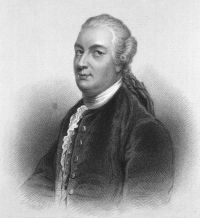 James Bruce,
Travels to Discover the Source of the Nile
(1790)
James Bruce,
Travels to Discover the Source of the Nile
(1790)
“ These are the Troglodytes on the eastern part of Abyssinia, towards the Red Sea, south of Walkayt, Sire, Tigré, and Baharnagash, till they are there cut off by the mountains of the Habab. These, the most powerful of all their tribes, are comprehended under the general name of Dobenah; the tribe Baasa, which we have already spoken of as occupying the banks of the Tacazzé, are the only partners they have in the peninsula formed by that river and the Mareb, Their country and manner of life have been already abundantly described. ”
 Bayard Taylor,
Lands of the Saracen
(1859)
Bayard Taylor,
Lands of the Saracen
(1859)
“ Leaving Baïas, we travelled northward, over a waste, though fertile plain. The mountains on our right made a grand appearance, with their feet mantled in myrtle, and their tops plumed with pine. They rise from the sea with a long, bold sweep, but each peak falls off in a precipice on the opposite side, as if the chain were the barrier of the world and there was nothing but space beyond. In the afternoon we left the plain for a belt of glorious garden land, made by streams that came down from the mountains. ”
William Crooke, The Tribes and Castes of the North-Western Provinces and Oudh…
“ Sub-divisions of the Bais. 7. Numerous castes in the Faizâbâd and Gonda Districts, such as the Gandhariyas, the Naipuriyas, the Barwârs, and the Châhus, claim to have been originally Bais, while the equal lengths of their pedigrees show that they were established in these districts at about the beginning of the sixteenth century. There are, besides, numerous families of small landowners in the east of Râê Bareli, who call themselves Bharadih Bais, and whose want of any tradition of emigration and peculiar religion distinguish them from the pure Bais of the west. ”
George Bass, An Account of the English Colony in New South Wales…
“ It is almost unnecessary to say that these people go naked. They, however, wore belts round the waist, and fillets about the head and upper parts of the arm. These were formed of hair, twisted into yarn-like threads, and then into bandages, mostly reticulated. Indeed the inhabitants of this bay appeared to possess in general a very pointed difference from, if not a superiority over, those of New South Wales, particularly in their net-works. A seine eighty feet in length, and the scoop nets which they use, have been mentioned. ”
William Crooke, The Tribes and Castes of the North-Western Provinces and Oudh…
“ Religion and social standing. 8. There is nothing peculiar about the religion of the Bais except their tribal worship of the snake, and their reverence for a clan goddess, Mathotê, who is worshipped at the Mathotepur fair, in the Sîtapur District. She became a Sati at the death of her consort. The ordinary Bais give their daughters in marriage, amongst others, to the Sengar, Bhadauriya, [124] Chauhân, Kachhwâha, Gautam, Parihâr, Dikhit and Gaharwâr Râjputs, and receive daughters in marriage from the Banâphar, Janwâr, Khîchar, Raghubansi, Raikwâr, Karchauli, and Gahlot. ”
 ʻAbdu'l-Bahá,
A Traveler's Narrative Written to Illustrate the Episode of the Báb
ʻAbdu'l-Bahá,
A Traveler's Narrative Written to Illustrate the Episode of the Báb
“ All who were known to be of this sect fell under suspicion. Bahá’u’lláh was passing the summer in the village of Afchih situated one stage from Ṭihrán. When this news was spread abroad and punishment began, everyone who was able hid himself in some retreat or fled the country. Amongst these Mírzá Yaḥyá, the brother of Bahá’u’lláh, concealed himself, and, a bewildered fugitive, in the guise of a dervish, with kashkúl in hand, wandered in mountains and plains on the road to Rasht. ”
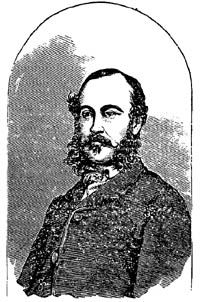 Robert Brough Smyth,
The Aborigines of Victoria
(1878)
Robert Brough Smyth,
The Aborigines of Victoria
(1878)
“ I.—Baiame. "Baiame" (pronounced like the three words "By-a-me," and in the Wellington district south of the Namoi "By-a-my") is the name by which tribes scattered over a great portion of the north-west and west of New South Wales designate the Supreme Being. The blacks there who are acquainted with English, if asked what "Baiame" is, reply, "Carbon-massa" i.e., the Great Master; and to further enquiry as to what they and their fathers know of Baiame, they reply that He made earth, and water, and sky, animals and men; that He makes the rain come down, and the grass grow ”
Clarence Day, Jr., The Man Who Knew Gods (1914)
“ To give you an instance: Bashwa is supposed to think highly of hunters and sailors, and the Waam-folk always profess to think highly of them too. That attitude, however, is only official, not real. Very few of them actually become sailors. The life is na-g'il."He came to a pause. "I WONDER whether we, too, have a G'il," I said, to humor him. "We shall have to ask some of your Waam-folk to come here and tell us."The explorer looked me over as though he were "continuing his observations" of my manners and customs. "Yes," he said, "there's a white man's G'il." ”
George Bass, An Account of the English Colony in New South Wales…
“ The wood is longer grained, and more tough, splitting easier and more true than any other species of the gum tree. The natives are, in person, similar to those living about Port Jackson, but their language was perfectly unintelligible. They used canoes, of which they seemed very careful; for on his rowing round the point of Snug Cove, when Mr. Bass was on his first visit to this bay in the whale boat, a party of them paddled hastily on shore, taking their canoes upon their heads, and running off with them into the woods. ”
Timothy Coghlan, John Gregory, William Arnold and Ronald McNeill, 1911 Encyclopedia Britannica (1911)
“ The only idea of a god known to be entertained by them seems to be that of the Euahlayi and Kamilaori tribe, Baiame, a gigantic old man lying asleep for ages, with his head resting on his arm, which is deep in the sand. He is expected one day to awake and eat up the world. Researches go to show that Baiame has his counterpart in other tribes, the myth varying greatly in detail. But the Australians are distinguished by possessing elaborate initiatory ceremonies. Circumcision of one or two kinds was usual in the north and south, but not in Western Australia or on the Murray river. ”
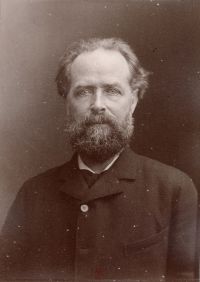 Élisée Reclus,
Africa by Élisée Reclus/Volume 4
(1890)
Élisée Reclus,
Africa by Élisée Reclus/Volume 4
(1890)
“ In the Kalahari Desert, on the borders of the Bechuana territory, near Lake Ngami and surrounding saline basins, in the Zambese valley ; lastly, on the plateaux of the NanKUjuaa and Ilereros, where many Bushman tribes, here called Ba-Roas. live in the same social conditions as those of other races, observers have not noticed such a great disparity in stature as farther stnith. In some districts these Ba-Roas are even taller as well as superior in strength and activity to the neighbouring peoples. ”
Élisée Reclus,
Africa by Élisée Reclus/Volume 3
(1892)
“ The Ba-Songe are a numerous nation, their territory being no less densely peopled than many of the more crowded parts of Europe itself. On all the interfluvial sections of the plateau are developed interminable villages, which have been compared to "black caterpillars crawling over the grassy surface of the prairies." ”
George Grey, Journals of Two Expeditions of Discovery in North-West and Western Australia…
“ THE TOWN OF BAHIA.The town of Bahia looks very beautiful from the sea; but on entering you find it dreadfully filthy. The stench of the lower town is horrible. Even the President's palace is a dirty and wretched-looking building: his salary, I understand, is 600 pounds a year. By the last returns the population of the town was 120,000, 100,000 of whom were blacks. All the burdens here are carried by slaves as there are no carts and the breed of horses is small, being perfect ponies. ”
Samuel Graham Wilson, Bahaism and Its Claims
“ Already several American Bahais have married Persian women, and Persian men American women. One American Bahai woman has married a Japanese. Abdul Baha illustrates the relation of the races by a reference to animals. "Consider the kingdom of the animals. A pigeon of white plumage would not shun one of black or brown." In a tablet sent to America, he directs: "Gather together these two races, black and white, into one assembly and put such love into their hearts that they shall even intermarry."360 Again he says:361 "The coloured people must attend all the unity meetings. ”
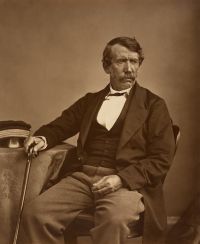 David Livingstone,
A Popular Account of Dr Livingstone's Expedition to the Zambesi and its Tributaries…
(1894)
David Livingstone,
A Popular Account of Dr Livingstone's Expedition to the Zambesi and its Tributaries…
(1894)
“ In domestic contentions the Bawe are careful not to kill each other; but, when one village goes to war with another, they are not so particular. The victorious party are said to quarter one of the bodies of the enemies they may have killed, and to perform certain ceremonies over the fragments. ”
Lilian Elwyn Elliott, Brazil today and tomorrow (1917)
“ It is the swarming coloured people of Bahia, crowded in the cobble-paved, half-lighted rookeries of the lower town and the tilted streets leading to the upper town, who make it possible to keep open the doors of that city’s four hundred churches. ”
George Bass, An Account of the English Colony in New South Wales…
“ Bass ascended; and he was much surprised to find it abounding with fine tall gum-tree timber uncommonly straight. The shore on the east side of the river, proceeding up, is covered with a good but shallow soil, and lightly wooded; cultivable for the greater part with any kind of grain, and the whole fit for pasturage, though, perhaps, not sufficiently watered for large cattle which require much drink. On the west side the country rises too suddenly into stony hills to be in general so good as in most other places. It would, however, afford tolerable pasturage ”
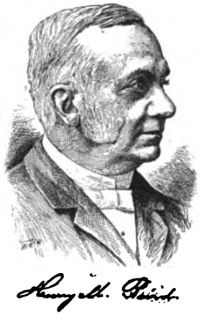 Henry Martyn Baird,
History of the Rise of the Huguenots…
Henry Martyn Baird,
History of the Rise of the Huguenots…
“ Baum discovered at Zurich, and has published in the volume of documents which figures as an appendix to the second volume of his extremely valuable biography of Beza. It is superfluous for me to acknowledge formally my obligations to this rich storehouse of original authorities, since the frequent references that I have already made, and shall doubtless have occasion for some time to make, to its separate documents, will sufficiently attest the high estimate I place upon its value. The correspondence of the reformers is always an important commentary upon the contemporaneous history. ”
Dirk Hendrik Kolff, Voyages of the Dutch brig of war Dourga (1840)
“ The western side of Baba is so precipitous and overgrown with forest, that cultivation has extended but very little; the more fertile island Wetang being selected as a more suitable spot for their plantations of roots, Indian corn and vegetables. The neighbouring waters supply excellent fish, abundance of which were daily caught by our seamen with the seine. The natives, however, pay little heed to the bounty which the sea affords. The interior of the [Pg 138] island is overrun with wild cattle, hogs and goats, the woods at the same time being well stocked with feathered game. ”
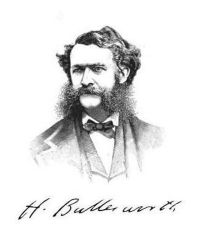 Hezekiah Butterworth,
Zigzag Journeys in Northern Lands…
Hezekiah Butterworth,
Zigzag Journeys in Northern Lands…
“ The bells of Basle (Basel) , Strasburg, Speyer, Heidelberg, Worms, Frankfort, Mayence, Bingen, and Bonn all ring out a meaning to the German student that the ordinary traveller does not comprehend. Bell land is one of mystery.“For example, the clocks of Basel. The American traveller arrives at Basel, and hurries out of his hotel, and along the beautiful public gardens, to the terrace overlooking the Rhine. He looks down on the picturesque banks of the winding river; then far away his eye seeks the peaks of the Jura. [222] “The bells strike. The music to his ears has no history. ”
