Battle of Franklin

Definition and stakes

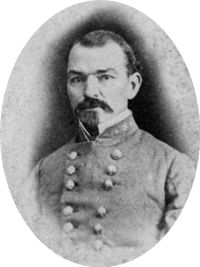
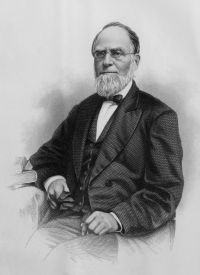
Portrait of Samuel Gibbs French Samuel Gibbs French,  Two Wars: An Autobiography of General Samuel G. French

“ J. D. Cox, Union army, who commanded most of the troops engaged in the battle of Franklin, in his volume published describing this battle (on page 15) states that our killed—1,750—exceeded "Grant's at Shiloh, McClellan's in the seven days' battle, Burnside's at Fredericksburg, Rosecrans's at Stone's river or at Chickamauga, Hooker's at Chancellorsville, and were almost as many as Grant's at Cold Harbor, and nine less than the British loss at Waterloo out of 43,000 men." The killed, as I have shown at Buena Vista, is very great compared with the wounded; more than at Franklin. ”
Source: Gutenberg

David Wright Judd,  The story of the Thirty-Third N. Y. S. Vols (1864)

“ Division was also transferred from the extreme right of the line to the right of the First Corps, and became engaged. General Franklin was seated, most of the time, in a little grove, which he had made his temporary headquarters, watching the progress of the battle, and delivering orders to the Aid-de-Camps, who were constantly arriving and departing. Occasionally mounting his horse, he rode up and down the lines, regardless of the missiles of death, anxiously peering in the direction of the woody crest, to discover if possible some weak spot in the enemy’s lines. ”
Source: Gutenberg

Fannie A. Beers,  Memories

“ Had orders been obeyed and carried out at Spring Hill, there never would have been a fight at Nashville. By some misunderstanding, the Yankee army was allowed to cross at the above-named place without being attacked. We followed on their tracks to Franklin, picking up stragglers and prisoners all along the way, to the amount of several hundred.
"We left Columbia at daylight, marched twenty-three miles, and fought the battle of Franklin before dark.
”
Source: Gutenberg

Get perspective with Kwize: daily news enlightened by great literature