Bulgars

Definition and stakes

Sir Arthur Evans,  Through Bosnia and the Herzegóvina on foot (1877)

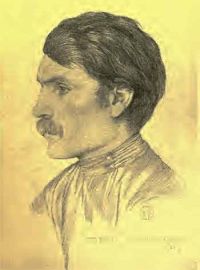
“ Yet the climate of the modern Bulgaria, in its widest sense, does not differ in any considerable degree from that of the Croats, except that parts of the Bulgarian area are hotter. Both are lands of vines and fig trees. Yet the language is almost the same. The modern Bulgar can talk with the Croat without an interpreter. Whence, then, this startling divergence of attire? The reason is to be sought far away in the dim twilight of history. Originally the Bulgars were not a Sclavonic people. Their kinship lies with mysterious Huns and Tartars. ”
Source: Gutenberg

Nevill Forbes,  The Balkans: A History of Bulgaria…

“ At times a diversion was caused by the Bulgars taking the part of the Greeks, as in 718, when they ‘delivered’ Constantinople, at the invocation of the Emperor Leo, from the Arabs, who were besieging it. From about this time the Bulgarian monarchy, which had been hereditary, became elective, and the anarchy of the many, which the Bulgars found when they arrived, and which their first few autocratic rulers had been able to control, was replaced by an anarchy of the few. Prince succeeded prince, war followed war, at the will of the feudal nobles. ”
Source: Gutenberg

Various,  Popular Science Monthly (1899)

“ It certainly finds no counterpart among the southern Slavs or the Turks. The only other people who resemble these Bulgars in long-headedness are the Greeks. Even they are far separated; and, in any event, but very impure representatives of the type. What shall we say? Two explanations seem to be possible, as Dr. Beddoe observes. [28] Either this dolichocephaly is due to the Finnicism of the original Bulgars, or else it represents a characteristic of the pre-Bulgarian population of the Danube basin. ”
Source: Wikisource

Get perspective with Kwize: daily news enlightened by great literature