Summary

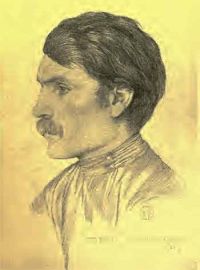
Portrait of Stephen Graham Stephen Graham Europe—whither bound? (Quo vadis Europa… (1922)

How strange that all the luxury and glamour of Vienna, as you see it at this moment, is the concomitant of complete decline and mortal peril. In arriving in the city one felt at last that one was in Europe, but it proves to be not the Europe of the future. Vienna in 1921 is part of the sunset of that old radiant, peaceful Europe we knew before the war. Night has to swallow it up, and the future lies on other horizons, in Prague and Belgrade and Budapest, in the capitals of that new Europe which arises from the defeat and ruin of the war.
Source: Gutenberg

Portrait of Stephen Graham Stephen Graham Europe—whither bound? (Quo vadis Europa… (1922)

Rome, the capital of capitals, still continues to be a place of destiny in Europe. It is not in the glare of light in which Berlin and Paris find themselves, but the fates of Berlin and Paris are secretly dependent on it. For Rome sways the balance of power after the war. If Rome backs Germany, France at once feels isolated; if Rome backs France, Germany must come to terms. The French are victors and have the winning forces in their hands, but the Italians are psychologists and know how to win without material force.
Source: Gutenberg

Portrait of Stephen Graham Stephen Graham Europe—whither bound? (Quo vadis Europa… (1922)

Berlin is a city of reason, not a city of faith. You cannot get people to try and do the impossible there. It loves to grade itself upon the possible and do that. Hence the apathy regarding Germany's resurrection. Here all is measured and planned and square and self-poised. No buildings aspire. The golden angels and the other things which are high—are perched there. Some one put them up; they did not fly so high. All the great capitals of Europe are redeemed more by their past than adorned by their present, but Berlin has no old Berlin to help her.
Source: Gutenberg

Get perspective with Kwize: daily news enlightened by great literature