“ Cape Hatteras, the most remarkable and dangerous cape on the coast of North American, is situated in latitude thirty-five degrees and twelve minutes, and has occasioned the destruction of many a fine vessel, and the loss of hundreds of valuable lives. The water is very shoal at a great distance from the cape, which is remarkable for sudden and violent squalls of wind, and for the most severe storms of thunder, lightning, and rain, which happen almost every day for one half the year. ”
Cape Hatteras
Definition and stakes
Cape Hatteras, a prominent cape on North Carolina’s Outer Banks, is renowned as the “Graveyard of the Atlantic” for its perilous waters and rich history of shipwrecks. Its ever-changing sands, violent storms, and Diamond Shoals have claimed numerous vessels, yet the area also features lighthouses and a spirit of resilience, exemplified by the relocated Cape Hatteras Lighthouse.
Authors like Jules Verne captured its dangerous charm in Captain Hatteras, while Nathaniel H. Bishop emphasized its significance in maritime rescue efforts. Writers have consistently portrayed the cape as a meeting point of hazard and human creativity, reflecting its dual legacy of sorrow and endurance.
Quotes about “Cape Hatteras”
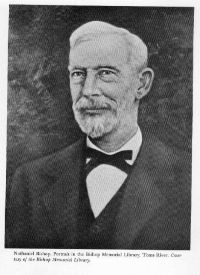 Nathaniel H. Bishop,
Voyage of the Paper Canoe
Nathaniel H. Bishop,
Voyage of the Paper Canoe
“ With a fine telescope he could frequently identify vessels a few miles from the cape, and telegraph their position to New York. He had lately saved a vessel by telegraphing to Norfolk its dangerous location on Hatteras beach, where it had grounded. By this timely notice a wrecking-steamer had arrived and hauled the schooner off in good condition.A low range of hills commences at Cape Hatteras, in the rear of the light-house, and extends nearly to Hatteras Inlet. This range is heavily wooded with live-oaks, yellow pines, yaupons, cedars, and bayonet-plants. ”
 Willis J. Abbot,
The Naval History of the United States…
Willis J. Abbot,
The Naval History of the United States…
“ Scarcely would one be safely afloat, than another would "bring up all standing" on some new shoal. Two weeks elapsed before all the vessels were safe within the landlocked sound. They were none too soon; for hardly had the last vessel crossed the bar, than the black gathering clouds, the murky, tossing sea, and the foaming billows breaking on the bar, foretold another of the storms for which Cape Hatteras is famed. Through the storm a queer-looking craft was seen approaching the fleet. ”