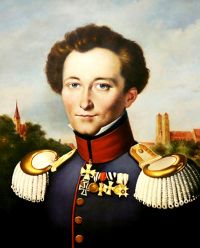
“ Although the influence of a single inhabitant of the theatre of war on the course of the war in most cases is not more perceptible than the co-operation of a drop of water in a whole river, still even in cases where there is no such thing as a general rising of the people, the total influence of the inhabitants of a country in war is anything but imperceptible. Every thing goes on easier in our own country, provided it is not opposed by the general feeling of the population. All contributions great and small, are only yielded to the enemy under the compulsion of direct force ”
Carl von Clausewitz
Definition and stakes
Carl von Clausewitz, a Prussian general and military theorist, is renowned for his seminal work On War (Vom Kriege), which examines war as a complex interplay of psychological, political, and strategic factors. Stressing the unpredictability of conflict under the "fog of war," he argued that war cannot be reduced to mere calculations, highlighting instead its deep connection to policy and the ethical dimensions of command.
His assertion that "war is the continuation of policy with other means" underscores his belief in war's role as an extension of political objectives. Though his unfinished treatise remains a cornerstone of military thought, its enduring relevance lies in its dialectical exploration of war's contradictions, contrasting sharply with more mechanistic approaches like those of Antoine-Henri Jomini. Clausewitz’s legacy persists in modern strategy, where his emphasis on flexibility, politics, and the human element continues to shape military and geopolitical analysis.
Quotes about “Carl von Clausewitz”
“ When an army is posted at a right angle with its communications, it is difficult, even with a considerable superiority, to interrupt the communications by any detachments or partisans sent out for the purpose. If we think only of the difficulty of covering absolutely a certain space, we should not believe this, but rather suppose, on the contrary, that it must be very difficult for an army to protect its rear (that is, the country behind it) against all expeditions which an enemy superior in numbers may undertake. Certainly, if we could look at everything in war as it is on a sheet of paper! ”
“ But, at the same time, there are in it two things of importance for our subject: first, flank and rear attacks have, as a rule, a more favourable effect on the consequences of the decision than upon the decision itself. Now as concerns the retrieving a battle, the first thing to be arrived at above all is a favourable decision and not magnitude of success. In this view one would therefore think that a force which comes to re-establish our combat is of less assistance if it falls upon the enemy in flank and rear, therefore separated from us, than if it joins itself to us directly ”
