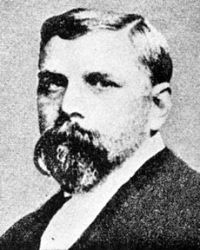
The concept of an "outpost" refers to a remote settlement or forward station, often symbolizing the edge of civilization, exploration, or territorial expansion. Authors have examined this theme through diverse perspectives: R.M. Ballantyne depicts it as a fur-trading center in the American wilderness, while Alfred Thayer Mahan views it as a fragile frontier in need of defense.
Josephine Clifford underscores the disruptive effect of human presence on pristine landscapes, and Robert Louis Stevenson captures the poetic cadence of roads as extensions of human effort. James Cook’s narratives emphasize outposts as locations where nature and culture intersect, and Winthrop Packard compares them to strongholds against the untamed wild. These viewpoints together illustrate the outpost as a transitional space where civilization encounters the unknown, molded by both human aspiration and the endurance of the natural world.
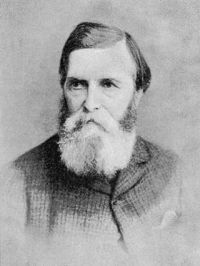 R. M. Ballantyne,
Wrecked but not Ruined
R. M. Ballantyne,
Wrecked but not Ruined