“ At this stage of the controversy, Cosmas Indicopleustes, by direction of the Catholic church, undertook to give a description of the earth. According to Cosmas, the universe is in the form of an immense box, twice as broad as it is high and twice as long as it is broad. ”
Cosmas Indicopleustes
Definition and stakes
The theme of “Cosmas Indicopleustes” has been addressed by authors such as John Fiske, Sir Arthur Evans, J. F. Blake, Sir Clements R. Markham and J. H. Ward. It is often associated with terms like Cosmo, universe, kosmos, Earth and Sun.
Quotes about “Cosmas Indicopleustes”
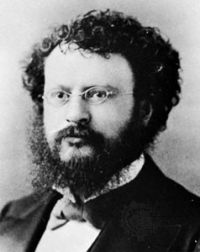 John Fiske,
The Discovery of America Vol. 1…
“ In the course of the reign of Justinian, we get references at first hand to India, and coupled withal to a general theory of cosmography. This curious information we have in the book of the monk Cosmas Indicopleustes. Cosmas Indicopleustes, written somewhere between A. D. 530 and 550. A pleasant book it is, after its kind. In his younger days Cosmas had been a merchant, and in divers voyages had become familiar with the coasts of Ethiopia and the Persian gulf, and had visited India and Ceylon. ”
Sir Clements R. Markham, The Paladins of Edwin the Great
“ The Pagans are confuted." Porlor said that he would be glad if the holy monk would tell them about the voyage to India. "I am waiting for God to call me to begin a longer voyage," was the answer. "Monas knows all. I taught him." Cosmas had tired himself, and began to doze. The old man was not long for this world. He had done his work, which was to throw back science for centuries. The interview with old Cosmas Indicopleustes then came to an end, and the boys took their leave. They reached Myos Hormos a little after sunset, and were disappointed to hear that there was no news of Athanagild. ”
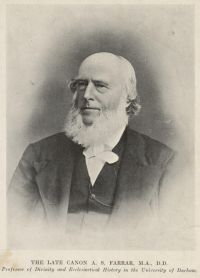 Adam Storey Farrar,
History of Free Thought in Reference to The Christian Religion
“ Ambrose's refutation are given in Cave's Lives of Fathers (Life of Ambrose, § 3. p. 576.) 245.Augustin refutes this objection in several places of the first five books in the De Civ. Dei.246.The work of Cosmas Indicopleustes in the middle of the sixth century is designed to show the falsehood of the Ptolemaic system of astronomy in assuming the world to be a sphere, and proves the continuance of speculation on the harmony of science and revelation. See Donaldson's Gr. Lit. ”
John Fiske,
The Discovery of America Vol. 1…
“ Among the Fathers of the Church there was some difference of opinion; while in general they Opinions of Christian writers. denied the existence of human beings beyond the limits of their Œcumene, or Inhabited World, this denial did not necessarily involve disbelief in the globular figure of the earth. [454] The views of the great mass of people, and of the more ignorant of the clergy, down to the time of Columbus, were probably well represented in the book of Cosmas Indicopleustes already cited. ”
Sir Arthur Evans, Through Bosnia and the Herzegóvina on foot (1877)
“ Their belief in the evilness of matter was productive, as such a belief always has been, of much asceticism; which, if the concurrent testimony of their enemies is to be believed, they carried at times to deplorable excesses. ‘They show themselves,’ says Cosmas, ‘strong ascetics, for they call the Devil the Creator of all things, and declare that it is his Commandment that men [xxxviii] should take wives, eat flesh, and drink wine. ”
Sir Arthur Evans, Through Bosnia and the Herzegóvina on foot (1877)
“ Verily this is the first question which prepares the weak in belief for the reception of the Manichæan heresy.’ The Bogomiles satisfied their reason by supposing two conflicting self-existent principles of Good and Evil. Matter and the visible world belong to the Spirit of Evil. ‘Everything,’ says Cosmas, ‘exists, according to the Bogomiles, of the will of the Devil. ”
1911 Encyclopædia Britannica, Volume 7… (1911)
“ According to Cosmas the earth is a rectangular plane, covered by the vaulted roof of the firmament, above which lies heaven. In the centre of the plane is the inhabited earth, surrounded by ocean, beyond which lies the paradise of Adam. The sun revolves round a conical mountain to the north—round the summit in summer, round the base in winter, which accounts for the difference in the length of the day. Cosmas is supposed by some to have been a Nestorian. ”
J. F. Blake, Astronomical Myths: Based on Flammarions's "History of the Heavens"
“ On the four outsides of the earth rise four perpendicular walls, which surround it, and join together at the top in a vault, the heavens forming the cupola of this singular edifice.The world, according to Cosmas, was therefore a large oblong box, and it was divided into two parts; the first, the abode of men, reaches from the earth to the firmament, above which the stars accomplish their revolutions; there dwell the angels, who cannot go any higher. The second reaches upwards from the firmament to the upper vault, which crowns and terminates the world. ”
Robert Shea, The Saracen: Land of the Infidel
“ Fra Tomasso, scribbling notes on a parchment, looked up and asked, "Did you say that the Tartar soldiers have the faces of dogs, Sire Cosmas?"Cosmas shook his head, looking himself somewhat sheepish, Simon thought. "We spoke of them so because their pointed fur caps made them look like dogs.""I wondered, because Aristotle writes of men with animals' heads living in remote regions," said the stout Dominican. He made a note.Cosmas brightened. "They do eat the flesh of living prisoners. ”
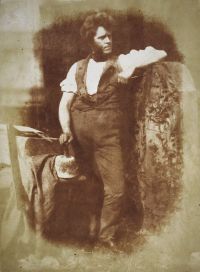 Hugh Miller,
The Testimony of the Rocks
“ In the sectional view of Cosmas the heavens are represented as a semicircular vault or tent raised on perpendicular walls; a vast mountain beyond the "Great Sea," lofty as the innermost continent of the Buddhist cosmogony, rises immediately under it; when the sun passed behind this mountain it was night, and when it emerged from it, it was day. And certainly under the crystal box of the monk it would be in vain to attempt, by passing westwards, to arrive at the far east. The cosmogony of Cosmas was also that of the doctors of Salamanca ”
Edmund Venables, Dictionary of Christian Biography and Literature (1911)
“ The arguments by which Cosmas supports his theory are chiefly built on isolated passages of Scripture, as interpreted by the early Fathers. Some, however, are drawn from reason and the nature of the case—e.g, the absurdity of the supposition of the existence of antipodean regions, inasmuch as the beings on the other side of the world must drop off, and the rain would fall upwards instead of downwards; while the supposed rotatory motion of the universe is disproved by the disturbance that would be caused to the repose of the blessed in heaven by their being perpetually whirled through space. ”
 Hilaire Belloc,
Emmanuel Burden, merchant, of Thames St…
(1915)
“ Cosmo withdrew it and held it in his right hand, and, even at that most incongruous moment, Mr Abbott could not refrain from laughter.“You will have it,” he said; and his amusement so far got the better of his temper, that Cosmo thought for one moment inwardly whether it would not be better to approach this coarse mind by another channel. But his training wisely persuaded him that the most direct of methods was the best. The method whereby men tame beasts; the masterly method of fear. ”
 Charlotte M. Yonge,
History of Christian names
(1884)
“ Kosmos originally meant order; but, having been applied to the order of nature, has in our day come usually to mean the universe.Cosimo, or Cosmo, as the Italians called it, was used at Milan and Florence, where it gained renown in the person of the great man who made the family of Medici eminent, and who prepared the way for their aspirations to the elevation that proved their bane and corruption. 126France calls the word Côme without using it as a name, and Russia adopts it as Kauzma. ”
 George MacDonald,
Warlock o' Glenwarlock: A Homely Romance
“ I do not think Cosmo loved his home too much; I only think he did not love it enough in God. To love a thing divinely, is to be ready to yield it without a pang when God wills it; but to Cosmo, the thought of parting with the house of his fathers and the rag of land that yet remained to it, was torture. This hero of mine, instead of sleeping the perfect sleep of faith, would lie open-eyed through half the night, hatching scheme after scheme—not for the redemption of the property—even to him that seemed hopeless—but for the retention of the house. ”
Garrett Putman Serviss, The Second Deluge
“ It was the wonderful buoyancy of the levium barge that saved us. But the terrors of that scene can never fade from my memory. And the fearful sufferings of the queen! And our children—but I cannot go on with this!""Calm yourself, your majesty," said Cosmo sympathetically. "The whole world has suffered with you. If we are spared and are yet alive, it is through the hand of Providence—to which all of us must bow." ”
Hilaire Belloc,
Emmanuel Burden, merchant, of Thames St…
(1915)
“ Then they bade each other good-night, and the last word Cosmo heard that evening as he turned back towards the house was the great and comforting word “Hôme,” rolled out by Mr Barnett to his servant in the accent of command.When Cosmo had re-entered the house and approached, with great reluctance, the room whose atmosphere still seemed full of failure, he found that his father had gone to bed, and he was glad; for, like most men possessed of wisdom, he trusted half his fortunes to the influence of other men’s sleep. ”
 Fanny Chambers Gooch Iglehart,
Face to Face with the Mexicans
(1887)
“ If Cosme had died on the road, or a hundred robbers had surrounded and threatened his life and property, except he rode in the rear of the carriage, he would have forfeited his all, and his body would have been found, where all good mozos like to be—in front. When Palomas was reached, and our horses were reined in preparatory to halting in front of the house where we were to spend the day, an amusing spectacle greeted us. Faithful Cosme was lying on the ground. ”
Garrett Putman Serviss, The Second Deluge
“ Is a brief prolongation of such a life worth the effort of grasping for?""Yes," said Cosmo with still greater energy. "We may still save the race. I have chosen most of my companions in the Ark for that purpose. Not only may we save the race of man, but we may lead it up upon a higher plane; we may apply the principles of eugenics as they have never yet been applied. You, M. De Beauxchamps, have shown that you are of the stock that is required for the regeneration of the world." ”
James Johonnot, Ten Great Events in History
“ Ptolemy said the world is round, but Cosmas, whom good Christians were bound to believe, since he founded his science on the Bible, said it is flat, with a wall around it to hold up the sky—very probable, certainly. But that notion of the ancients that the world is "round like a ball" had been caught up and believed by a handful of men scattered sparsely down through the centuries, and of late lead gained, among advanced scientists, more of a following than ever. ”
C. Raymond Beazley, Prince Henry the Navigator, the Hero of Portugal and of Modern Discovery…
“ And whatever we may think of Cosmas and his Christian System of the Whole World, Evolved out of Holy Scripture, he is of interest to us as the last of the old Christian geographers, closing one age which, however senile, had once been in the truest sense civilised, and preparing us to enter one that in comparison is literally dark. From the age of Justinian, and from the rise of Islam in the early years of the seventh century, the geographical knowledge of Christendom is on a par with its practical contraction and apparent decline. There are travellers ”
 George Grote,
Plato and the Other Companions of Sokrates…
“ The prompting of intelligent curiosity, the thirst for some plausible hypothesis to explain the Kosmos and its generation, the belief that a basis or point of departure might be found in the Kosmos itself, apart from those mythical personifications which dwelt both in the popular mind and in the poetical Theogonies, the mental effort required to select some known agency and to connect it by a chain of reasoning with the result — all this is a new phenomenon in the history of the human mind. ”
Garrett Putman Serviss, The Second Deluge
“ Whether Cosmo Versál's hypotheses were right or wrong, he always had a reply to any objection, and the prestige which he had gained by his disastrously correct theory about the watery nebula gave him an advantage so enormous that nobody felt enough confidence in himself to stand long against anything that he might advance. ”
Mrs. J. H. Philpot, The Sacred Tree; or, the tree in religion and myth
“ The ritual resolves itself, according to De Gubernatis, into a sun-charm. Soma, the moon, the god of plants, the lord of the dark forest of night or winter, is the good genius who furnishes the miraculous drink wherewith Indra, the solar hero, recruits his forces. It is under its influence, say the Vedas, that Indra performs his great deeds. Soma does really intoxicate the gods in heaven, incessantly renewing the triumph of light over its enemies. The sacrifice of the soma on earth is only a pale, naïve, and grotesque reproduction of that divine miracle. ”
George MacDonald,
Phantastes — Chapter XIII
(1858)
“ But when the first pangs of his disappointment had passed, Cosmo began to comfort himself with the hope that she might return, perhaps the next evening, at the same hour. Resolving that if she did, she should not at least be scared by the hateful skeleton, he removed that and several other articles of questionable appearance into a recess by the side of the hearth, whence they could not possibly cast any reflection into the mirror; and having made his poor room as tidy as he could, sought the solace of the open sky and of a night wind that had begun to blow, for he could not rest where he was. ”
George MacDonald,
Warlock o' Glenwarlock: A Homely Romance
“ Burns. And so little did the thing trouble the laird, that he never troubled Cosmo with a word on the matter—only, when he came home, asked him what it meant.But in after days Cosmo repented of having so completely dropped the old gentleman’s acquaintance; he was under obligation to him; and if a man will have to do only with the perfect, he must needs cut himself first, and go out of the world. ”
“ Entia are apprehended by the cogitant or intelligent soul of the Kosmos, Fientia by the sentient or percipient soul; the cosmical soul as a whole, in order to suffice for both these tasks, is made up of diverse component elements — Idem, correlating with the first of the two, Diversum, correlating with the second, and Idem implicated with Diversum, corresponding to both in conjunction. The Divine Architect is described as constructing a Kosmos, composed both of soul and body, upon the pattern of the grand pre-existent Idea — αὐτοζῷον or the Self-Animal ”
George MacDonald,
Warlock o' Glenwarlock: A Homely Romance
“ If there is one thing a Christian soul recoils from, it is meanness—of action, of thought, of judgment. What a heaven some must think to be saved into! At the same time Cosmo would not have left his father to make a fortune the most honourable.Through stress of weather, Cosmo was therefore thrown back once more upon his writing. But still, whether it was that there was too little of Grizzie or too much of himself in these later stories, his work seemed to have lost either the power or the peculiarity that had recommended it. ”
Garrett Putman Serviss, The Second Deluge
“ Cosmo issued another statement to the effect that he had perfected plans for an ark of safety, which he would begin at once to construct in the neighborhood of New York, and he not only offered freely to give his plans to any who wished to commence construction on their own account, but he urged them, in the name of Heaven, to lose no time. This produced a prodigious effect, and multitudes began to be infected with a nameless fear. ”
George MacDonald,
Warlock o' Glenwarlock: A Homely Romance
“ Cosmo was on the way to know all this, but now his trouble sat sometimes heavy upon him. Indeed the young straight back, if it feels the weight less, feels the irksomeness of the burden more than the old bowed one. With strength goes the wild love of movement, and the cross that prevents the free play of a single muscle is felt grievous as the fetter that chains a man to the oar. ”
 Honoré de Balzac,
The Works of Honoré de Balzac: About Catherine de' Medici…
“ Though this doctrine lies at the root of out labors, all adepts do not accept it. Cosmo," said the old man, indicating his brother, "Cosmo is devout; he pays for masses for the repose of our father's soul, and he goes to hear them. Your mother's astrologer believes in the Divinity of Christ, in the Immaculate Conception, and in Transubstantiation; he believes in the Pope's indulgences, and in hell—he believes in an infinite number of things.—His hour is not yet come, for I have read his horoscope; he will live to be nearly a hundred. ”

