Cynewulf

Definition and stakes

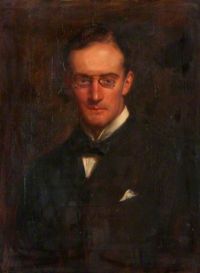
Portrait of William J. Long William J. Long,  Outlines of English and American Literature

“ There is a variety of poems belonging to the Cynewulf Cycle, and of some of these Cynewulf (born cir. 750) was certainly the author, since he wove his name into the verses in the manner of an acrostic. Of Cynewulf's life we know nothing with certainty; but from various poems which are attributed to him, and which undoubtedly reflect some personal experience, scholars have constructed the following biography,—which may or may not be true.
In his early life Cynewulf was probably a wandering scop of the old pagan kind, delighting in wild nature, in adventure, in the clamor of fighting men.
”
Source: Gutenberg

Portrait of William J. Long William J. Long,  English Literature

“ Works of Cynewulf. The only signed poems of Cynewulf are The Christ, Juliana, The Fates of the Apostles, and Elene. Unsigned poems attributed to him or his school are Andreas, the Phoenix, the Dream of the Rood, the Descent into Hell, Guthlac, the Wanderer, and some of the Riddles. The last are simply literary conundrums in which some well-known object, like the bow or drinking horn, is described in poetic language, and the hearer must guess the name. Some of them, like "The Swan" [33] and "The Storm Spirit," are unusually beautiful. ”
Source: Gutenberg

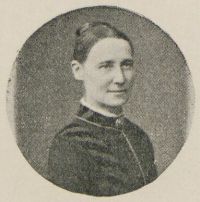
Portrait of Lucy Toulmin Smith Lucy Toulmin Smith,  Dictionary of National Biography… (1892)

“ H. Leo, in 1857, first tried to prove, from the runic letters forming the poet's name (in the three first poems above named) , that Cynewulf was a Northumbrian. He contended that the form should be Cynevôlf, although Dietrich pointed out that wulf, not wolf, is the Northumbrian form. On the assumption that Cynewulf is the author of the ‘Riddles,’ his northern origin is corroborated by the existence in a manuscript at Leyden of a riddle in Northumbrian dialect which is evidently one of the Exeter riddles (both in Sweet, Oldest English Texts, Early English Text Soc., 1885, p. 150) . ”
Source: Wikisource

Get perspective with Kwize: daily news enlightened by great literature