“ But an honest man’s aboon his might, Gude faith, he mauna fa’ that!At three o’clock in the morning the Dean of Faculty rose to address the jury on behalf of Deacon Brodie. In spite of the fact that he had been continuously engaged upon the case since nine o’clock the preceding morning, no signs of exhaustion appear in his eloquent and powerful speech. Every point telling in favour of the prisoner was given due prominence, and the utmost was made of the somewhat flimsy material of the alibi; the whole address forms a fine example of forensic oratory. ”
Deacon Brodie
Definition and stakes
The theme of “Deacon Brodie” has been addressed by authors such as George Douglas Brown, William Ernest Henley, George Waldo Browne, Charles Whibley and Robert Louis Stevenson. It is often associated with terms like Edinburgh, excise, Smith, office and John.
Quotes about “Deacon Brodie”
“ After his father’s death his sister, Jean Brodie, presided over his household; his other sister, Jacobina, to whom he refers in his letters as “Jamie,” having married Matthew Sheriff, an upholsterer in Edinburgh.{18}It seems incredible, regard being had to the confined and crowded stage on which the old city life was played, that Deacon Brodie’s protracted peccadilloes escaped the notice of those “stairhead critics,” who, Fergusson tells us— Wi’ glowring eye, Their neighbours’ sma’est faults descry. ”
“ Throughout the whole course of the robberies which we are about to consider, it is to be kept in view that Deacon Brodie retained the respect and esteem of his fellow-citizens—for his reputation among the associates of his secret life is immaterial; daily pursued his lawful avocations ”
 William Ernest Henley,
The Plays of W. E. Henley and R. L. Stevenson
William Ernest Henley,
The Plays of W. E. Henley and R. L. Stevenson
“ Brodie. ’Tis too big and too dangerous. I shirk King George; he has a fat pocket, but he has a long arm. [You pilfer sixpence from him, and it’s three hundred reward for you, and a hue and cry from Tophet to the stars.] It ceases to be business; it turns politics, and I’m not a politician, Mr. Moore. (Rising.) I’m only Deacon Brodie.Moore. All right. I can wait.Brodie (seeing Hunt) . Ha, a new face,—and with a patch! [There’s nothing under heaven I like so dearly as a new face with a patch.] Who the devil, sir, are you that own it? ”
“ His great-grandfather, Francis Brodie of Milnton, Elginshire, was a member of a family well known in the North of Scotland, and his grandfather, Ludovick Brodie of Whytfield, was a much respected Writer to the Signet in Edinburgh, who, on his death in 1758, was the oldest member of the Society. His father, Francis Brodie, was born in 1708, and in 1740 married Cecil, daughter of William Grant, writer in Edinburgh, with whose family he was already connected. Both the Deacon’s grandfathers, therefore, were members of the legal profession. ”
“ The Deacon had advanced five and a half guineas for the expenses of the journey, and, on his return, Smith repaid this sum, and entrusted Brodie with the balance to keep for him, and give him as he required it; but Brodie “gained a great part of it at play.” The Deacon, therefore, did not do so badly after all.{25} Head of Brodie’s Close, Lawnmarket. ”
“ Brodie at the death of his father, which happened about six years ago, inherited a considerable estate in houses in the city of Edinburgh, together with £10,000 in specie; but by an unhappy connection and a too great propensity to that destructive, though too predominant passion, gaming, he is reduced to his present deplorable situation.” That the Deacon owned some heritable property other than the family mansion in Brodie’s Close, appears from a statement by the author of “Kay’s Portraits” (1877, vol. I., pp. 141-2) . ”
“ The trial of Deacon Brodie has many claims upon the attention of a later age. It is of value to the antiquarian for the vivid picture it presents of the manners and customs of our forbears at a time when the life of Edinburgh yet flowed in the ancient arteries of the old city on the ridge, although beginning to circulate more freely in the spacious thoroughfares of the New Town already invading the fields across the valley. ”
“ In addition to the city work, his social and official position had secured for him the best cabinetmaking business in Edinburgh; but, notwithstanding these advantages, he was frequently at a loss for money.Deacon Brodie was already, in Stevenson’s striking phrase, “a man harassed below a mountain of duplicity,” and to one so circumstanced it is not surprising that the idea occurred of putting his professional opportunities to an unlawful use. ”
“ It is characteristic of the man that, on his last public appearance, we are informed, “Mr. Brodie appeared in a handsome suit of black clothes, and had his hair powdered and dressed with taste.” Twice, owing to some defect in the adjustment of the ropes, did the Deacon descend from the platform and enter into conversation with his friends ”
“ From the coachman of that vehicle Williamson learned that Deacon Brodie had left the coach at the foot of Old Street, Moorfields, instead of proceeding to the “Bull and Mouth,” where the coach stopped, and there all trace of him was lost. His pursuer repaired to the billiard tables, hazard tables, cock-pits, tennis courts, and other likely places, without hearing anything of him, and pushed his inquiries as far as Margate, Deal, and Dover, with the like result. ”
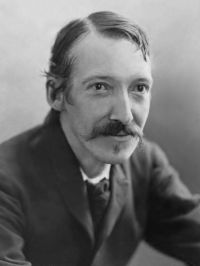 Robert Louis Stevenson,
The Works of Robert Louis Stevenson - Swanston Edition…
Robert Louis Stevenson,
The Works of Robert Louis Stevenson - Swanston Edition…
“ Softly he clambered out of bed and up to a false window which looked upon another room, and there, by the glimmer of a thieves' lantern, was his good friend the Deacon in a mask. It is characteristic of the town and the town's manners that this little episode should have been quietly tided over, and quite a good time elapsed before a great robbery, an escape, a Bow Street runner, a cock-fight, an apprehension in a cupboard in Amsterdam, and a last step into the air off his own greatly improved gallows drop, brought the career of Deacon William Brodie to an end. ”
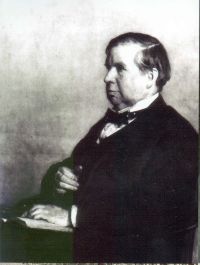 Charles Whibley,
A Book of Scoundrels
Charles Whibley,
A Book of Scoundrels
“ When Smith complained that a respite of six weeks was of small account, Brodie exclaimed, 'George, what would you and I give for six weeks longer? Six weeks would be an age to us.' The day of execution was the day of his supreme triumph. As some men are artists in their lives, so the Deacon was an artist in his death. Nothing became him so well as his manner of leaving the world. ”
Jacqueline Overton, The Life of Robert Louis Stevenson for Boys and Girls
“ As Henley grew stronger they planned to work together and write plays. Stevenson had done nothing of the kind since he was nineteen. Now they chose to use the same plot that he had experimented with at that time. It was the story of the notorious Deacon Brodie of Edinburgh, which both considered contained good material for a play."A great man in his day was the Deacon; well seen in good society, crafty with his hands as a cabinet-maker, and one who could sing a song with taste. Many a citizen was proud to welcome the Deacon to supper, and dismiss him with regret ... ”
 Arthur Wing Pinero,
Robert Louis Stevenson: the dramatist
(1903 | related_author)
Arthur Wing Pinero,
Robert Louis Stevenson: the dramatist
(1903 | related_author)
“ I'm a man once more till morning." But it is needless to dwell long on Deacon Brodie—ripeness of stagecraft is not to be looked for in a first attempt, a prentice piece. The play is chiefly interesting as exemplifying the boyish spirit of gleeful bravado in which Stevenson approached the stage. Again I say his instinct was to play with it, as he had played, when a boy, with his pasteboard theatre. In Admiral Guinea—a much better drama—the influence of his penny-plain-twopence-coloured studies is, if possible, still more apparent. Deacon Brodie was the melodrama of crime ”
“ Francis Brodie was a substantial wright and cabinetmaker in the Lawnmarket of Edinburgh, where he carried on an extensive and prosperous business. In 1735 he was made a Burgess, and in 1763, a Guild Brother of his native burgh. That he stood high in the estimation of his fellow-craftsmen is evidenced by his being, in 1775 and 1776, elected a member of the Town Council as Deacon of the Incorporation of Wrights, and again in 1779 and 1780, in the same capacity; while in 1776 he also represented the Incorporated Trades of the city as their Deacon Convener. ”
“ Corbett, of Stirling, too, was in the habit of coming to Edinburgh frequently on Excise business, and Brodie took the opportunity of accompanying him upon these occasions with a view to studying how the land lay.Having learned all that was necessary for his purpose, the Deacon went one day to the office with Smith, on pretence of inquiring for Mr. Corbett, and while he thus engaged the attention of the cashier, Smith took an impression in putty of the key of the outer door, which, according to the prevailing ingenuous custom, was hung upon a nail inside it. ”
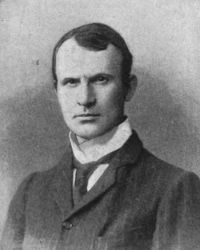 George Douglas Brown,
The House with the Green Shutters
George Douglas Brown,
The House with the Green Shutters
“ The entrance of Brodie spoiled sport for the Deacon. He had nothing of that malicious finesse that made Allardyce a genius at nicking men on the raw. He went straight to his work, stabbing like an awl."Hal-lo!" he cried, pausing with contempt in the middle of the word, when he saw young Gourlay. "Hal-lo! You here!—Brig o' the Mains, miss, if you please.—Ay, man! God, you've been making a name up in Embro. I hear you stood up till him gey weel," and he winked openly to those around. ”
“ On the journey from London to Edinburgh, Mr. Brodie was in good spirits, and told many things that had happened to him in Holland. He met with a Scots woman at Amsterdam, who asked him if he had been long from Scotland. She said that there was one Brodie, a citizen of Edinburgh, accused of robbing the Excise Office, and a great reward was offered for apprehending him. She little knew who she was speaking to, said Mr. Brodie. At Amsterdam, he fell in with the man who had committed a forgery on the Bank of Scotland. He (Brodie) said he was a very ingenious fellow. ”
“ But he became a frequenter of a disreputable tavern kept by James Clark, vintner, at the head of the Fleshmarket Close, where gambling by means of{15} Cock-fighting Match between the Counties of Lanark and Haddington in 1785, at which Deacon Brodie was present. (After Kay.) dice was nightly practised in a select company of sharpers and their dupes. It is probable that this house still survives in the truncated portion of the close remaining between the High Street and Cockburn Street. ”
Robert Louis Stevenson,
The Works of Robert Louis Stevenson - Swanston Edition…
“ You don’t, and I’ll scrag you as sure as my name’s Jerry Hunt.Ainslie. I’ll dae onything. It’s the hanging fleys me. I’ll dae onything, onything no’ to hang.Hunt. Don’t lie crawling there, but get up and answer me like a man. Ain’t this Deacon Brodie the fine workman that’s been doing all these tip-topping burglaries?Ainslie. It’s him, mister; it’s him. That’s the man. Ye’re in the very bit. Deacon Brodie. I’ll can tak’ ye to his very door.Hunt. How do you know?Ainslie. I gi’ed him a han’ wi’ them a’. It was him an’ Badger Moore and Geordie Smith ”
“ The author of “Traditions of Edinburgh” states that this diagram remained in the room, where it was so strangely out of place, till the demolition of the Old Tolbooth in 1817. Many of his friends came to see him, for, until the time of his execution drew near, no restriction was placed upon their visits, and every effort was made by them to obtain a commutation of the death sentence to one of transportation for life.In furtherance of this object Deacon Brodie, on 10th September, wrote letters to the Right Hon. ”
“ Brodie’s conduct consistent with his innocence of the crime charged against him.I would, in the next place, gentlemen, have you to attend to the prisoner’s behaviour when he flies from this place to London. He secretes himself in London for several weeks; search is made for him, but he cannot be found; he admits in one of his letters that he knew that Mr. Williamson was in search of him, but he did not choose an interview; a vessel is freighted for him by some persons, contrary to the duty they owed to their country; she is cleared out for Leith ”
“ The unfortunate prisoner, Mr. Brodie, is by no means singular in his attachment to this vice; nor is it at all confined to the lower stations of life. People of the highest rank scruple not, in the course of their gambling, to mix with highwaymen and pickpockets, and to descend to practices of chicane and cunning which, in any other situation, they would themselves abhor. It was but the other day that a gentleman of Brighthelmstone, reputed worth three thousand pounds per annum, was detected in the very act of using loaded dice, and was obliged to fly the country for it ”
“ You have had it clearly proven that all these letters are of his own handwriting, and in both of the scrolls he expressly acknowledges the crime for which he now stands at the bar. In one of them he says that he had no “direct” concern in any of the late depredations of Smith, Brown, and Ainslie, excepting “the last fatal one”; in the other the word “direct” is scored out, but in both of them he acknowledges his accession to the last act; by which he can{170} mean no other than the robbery of the Excise Office ”
“ That he found Brodie had fled; and the declarant, on going up to the main street, found Brodie standing at the head of the entry into the Old Green Market: That, a little after this, the declarant and Brodie walked arm-in-arm down Bridge Street, in order to see what they could observe about the shop; and, in passing down the street, they saw a man looking out at the door immediately under M‘Kain’s shop, and a guard soldier standing opposite, at the head of the stair which goes down to the Flesh Market ”
“ At any rate, the evidence is not inconsistent with the guilt of the pannel, for the Excise Office was broke into after eight o’clock, and Mr. Sheriff was in his own house in St. James’s Square about eight o’clock.As to the evidence of Jean Watt, who swears that Brodie came to her house that night at eight o’clock, you are to consider, gentlemen, that although, to be sure, she is not his wife, yet she is his mistress; and love is often as deeply rooted between persons of that kidney as between lawful man and wife. ”
William Ernest Henley,
The Plays of W. E. Henley and R. L. Stevenson
“ Hunt. Speaking as one admirer of the noble art to another, Mr. Deacon, the losers always do. I suppose the Badger cockfights like the rest of us?Brodie. I have met him in the pit.Hunt. Well, it’s a pretty sport. I’m as partial to a main as anybody.Brodie. It’s not an elegant taste, Mr. Hunt.Hunt. It costs as much as though it was. And that reminds me, speaking as one sportsman to another, Mr. Deacon, I was sorry to hear that you’ve been dropping a hatful of money lately.Brodie. You are very good.Hunt. Four hundred in three months, they tell me.Brodie. Ah!Hunt. So they say, sir. ”
“ Gentlemen, he knew that Smith and Ainslie were Mr. Brodie’s companions; and you cannot conceive that he would have presumed to put such a question to his master if he had not been convinced in his own mind of his master’s guilt. Mr. Brodie makes no answer to this question. Will it be said that a man conscious of his own innocence would have remained silent upon such an occasion? Gentlemen, I appeal to yourselves ”
George Douglas Brown,
The House with the Green Shutters
“ He's a credit to moar than Wilson; he's a credit to the whole town.""Ay," yelled Brodie; "the money wasna wasted on him! It must be a terrible thing when a man has a splurging ass for his son, that never got a prize!"The Provost began to get nervous. Brodie was going too far. It was all very well for Brodie, who was at the far end of the wagonette and out of danger; but if he [Pg 140] provoked an outbreak, Gourlay would think nothing of tearing Provost and Deacon from their perch and tossing them across the hedge. ”
