Earth's axis

Definition and stakes

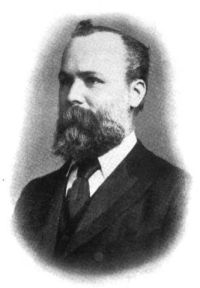
Portrait of Robert S. Ball Robert S. Ball,  The Story of the Heavens

“ If the earth were a perfect sphere, precession would be inexplicable. We are therefore forced to seek for an explanation of precession in the fact that the earth is not a perfect sphere. This we have already demonstrated to be the case. We have shown that the equatorial axis of the earth is longer than the polar axis, so that there is a protuberant zone girdling the equator. The attraction of external bodies is able to grasp this protuberance, and thereby force the earth's axis of rotation to change its direction. ”

Source: Gutenberg

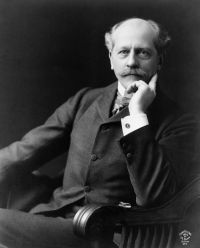
Portrait of James Ferguson James Ferguson,  Astronomy Explained Upon Sir Isaac Newton's Principles

“ The Earth’s Axis is a straight line passing through the center of the Earth, perpendicular to the Equator, and terminating in the Poles at it’s surface. This, in the real Earth and Planets is only an imaginary line; but in artificial Globes or Planets it is a wire by which they are supported, and turned round in Orreries, 79or such like machines, by wheel-work. ”
Source: Gutenberg

Portrait of Agnes M. Clerke Agnes M. Clerke,  A Popular History of Astronomy During the Nineteenth Century

“ The earth, owing to its ellipsoidal shape, should, apart from disturbance, rotate upon its "axis of figure," or shortest diameter; since thus alone can the centrifugal forces generated by its spinning balance each other. Temporary causes, however, such as heavy falls of snow or rain limited to one continental area, the shifting of ice-masses, even the movements of winds, may render the globe slightly lop-sided, and thus oblige it to forsake its normal axis, and rotate on one somewhat divergent from it. ”
Source: Gutenberg

Get perspective with Kwize: daily news enlightened by great literature