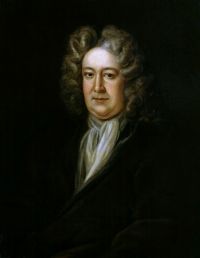
Edward the Martyr

Definition and stakes

S. Baring-Gould,  The Lives of the Saints, Volume 03…

“ Now, certainly he was not a martyr for the Christian faith, nor for right and truth in any shape; but he was a good youth, and was unjustly and cruelly killed, so people looked on him as a saint, and called him Edward the Martyr. The Anglo-Saxon Chronicle greatly laments his death, and says that a worse deed had never been done since the English came into Britain. It does not, however, say who killed him, but only that he was killed at eventide, at Corfe Castle. Henry of Huntingdon says that king325 Edward was killed by his own people ”
Source: Gutenberg

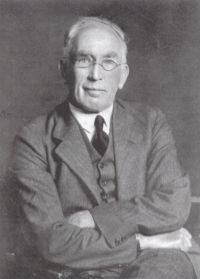
Portrait of Allen Mawer Allen Mawer,  1911 Encyclopædia Britannica, Volume 8… (1911)

“ The body was hastily interred at Wareham and remained there till 980, when Archbishop Dunstan and Ælfhere of Mercia united in transferring it with great ceremony to Shaftesbury. Edward seems to have been personally popular, and the poem on his death in the chronicle calls his murder the worst deed in English history. Very shortly after his death he was popularly esteemed to be both saint and martyr. ”
Source: Wikisource

Edwin Sidney Hartland,  Folk-Lore (1910)

“ In our own country we have only to refer to the honours paid to Saint Kenelm, king and martyr, to King Edward the Martyr, and to Simon de Montfort, Edward II., and Charles I., as examples of the extreme latitude of interpretation of the term martyr. More might easily be cited, and from other countries hundreds.
Some peoples indeed go to the length of putting to death a holy man in order to provide an object of devotion. At Gilgit there is the shrine of a famous Mohammedan saint who is said to have been thus murdered
”
Source: Wikisource

Get perspective with Kwize: daily news enlightened by great literature