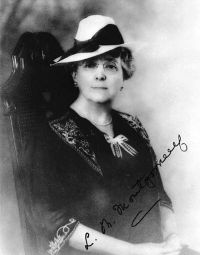
Emily St. Aubert

Definition and stakes

R. Brimley Johnson,  The women novelists (1918)

“ But Emily St. Aubert is not surely designed for comparison with even that “imbecility in females” which Henry Tilney declared to be “a great enhancement of their personal charms.” She is a heroine, not a woman; and if, unlike Walpole, Mrs. Radcliffe demands, and supplies, a material explanation of all supernatural appearances, she yet allows her imagination to wander freely over the realms of superstitious alarm, wherein the reason of woman cannot presumably hold sway. Certainly, had Emily been less impulsive she would have missed many opportunities of proving herself courageous. ”
Source: Gutenberg

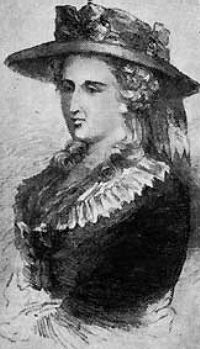
Portrait of Ann Ward Radcliffe Ann Ward Radcliffe,  The Mysteries of Udolpho

“ Aubert shut himself in his chamber. When he came forth, it was with a serene countenance, though pale in sorrow. He gave orders that his family should attend him. Emily only was absent; who, overcome with the scene she had just witnessed, had retired to her closet to weep alone. St. Aubert followed her thither: he took her hand in silence, while she continued to weep; and it was some moments before he could so far command his voice as to speak. It trembled while he said, “My Emily, I am going to prayers with my family; you will join us. We must ask support from above. ”
Source: Gutenberg

Ann Radcliffe,  The Mysteries of Udolpho — Volume I, Chapter I

“ In person, Emily resembled her mother; having the same elegant symmetry of form, the same delicacy of features, and the same blue eyes, full of tender sweetness. But, lovely as was her person, it was the varied expression of her countenance, as conversation awakened the nicer emotions of her mind, that threw such a captivating grace around her:
Those tend'rer tints, that shun the careless eye,
And, in the world's contagious circle, die.
St. Aubert cultivated her understanding with the most scrupulous care.
”
Source: Wikisource

Get perspective with Kwize: daily news enlightened by great literature