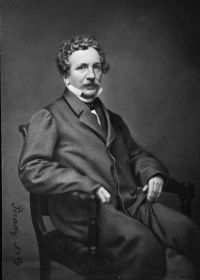
Ferdinand I of Naples

Definition and stakes

Luigi Villari 1911 Encyclopædia Britannica, Volume 10… (1911)

When his father ascended the Spanish throne in 1759 Ferdinand, in accordance with the treaties forbidding the union of the two crowns, succeeded him as king of Naples, under a regency presided over by the Tuscan Bernardo Tanucci. The latter, an able, ambitious man, wishing to keep the government as much as possible in his own hands, purposely neglected the young king’s education, and encouraged him in his love of pleasure, his idleness and his excessive devotion to outdoor sports. Ferdinand grew up athletic, but ignorant, ill-bred, addicted to the lowest amusements
Source: Wikisource

Baron Walter Runciman Runciman Drake, Nelson and Napoleon

Ferdinand had none of the qualities that are essential to a man occupying a position of authority. When the French came to take over the government of Naples, he flew, as usual, to Sicily, and under the continuous protection of British men-of-war was with great difficulty kept reigning there until the end of war, when he was again put on the throne of Naples in 1815, and forthwith commenced again his rule of incompetency and despotism, reversing the beneficent rule of his two able predecessors.
Source: Gutenberg

Portrait of William Shakespeare William Shakespeare The Tempest (1623)

Will you grant with me That Ferdinand is drown'd? SEBASTIAN. He's gone. ANTONIO. Then tell me, Who's the next heir of Naples? SEBASTIAN. Claribel. ANTONIO. She that is Queen of Tunis; she that dwells Ten leagues beyond man's life; she that from Naples Can have no note, unless the sun were post, The Man i' th' Moon's too slow, till newborn chins Be rough and razorable; she that from whom We all were sea-swallow'd, though some cast again, And by that destiny, to perform an act Whereof what's past is prologue, what to come In yours and my discharge.
Source: Gutenberg

Get perspective with Kwize: daily news enlightened by great literature