Fort St. David

Definition and stakes

Fanny Emily Penny,  On the Coromandel Coast (1908)

“ David and Cuddalore town, where the English had entrenched themselves as well as in the fort. The English made a counter attack on Pondicherry. They took the new town and utterly destroyed it (1778) . It cost them a large sum of money to demolish the handsome buildings, and one cannot but regret the necessity of its destruction. The French captured Fort St. David for the second time (1782) , and in return for what the English had done to their town they completed the work of demolition and left the fort a heap of ruins beyond possibility of repair. ”
Source: Wikisource

Robert Orme,  A History of the Military Transactions of the British Nation in Indostan… (1861)

“ David: their force consisted of 1,700 men, for the most part Europeans, of which 50 were cavalry: they had one or two companies of Caffre slaves, natives of Madagascar and of the eastern coast of Africa; which had been disciplined, and brought into India, by Mr. De la Bourdonnais. Their artillery consisted of six field pieces, and as many mortars.
The garrison of Fort St. David, with the addition of the officers and soldiers who had made their escape from Madrass, consisted of no more than 200 Europeans, and 100 Topasses.
”
Source: Wikisource

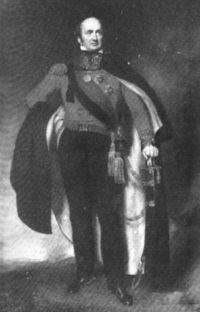
Portrait of John Malcolm John Malcolm,  The Life of Robert, Lord Clive…

“ To the westward of the fort, and within the Company's territory, were two or three populous villages, inhabited by the natives.
"The government of Fort St. David depended on that of Madras, to which it was immediately the next in rank; but, on the breach of the treaty of ransom, the Company's agents at Fort St. David regarding those of Madras as prisoners to the French, took upon themselves the general administration on the coast of Coromandel."
[14] Orme, vol. i. p. 7.
”
Source: Gutenberg

Get perspective with Kwize: daily news enlightened by great literature