Frederick Barbarossa

Definition and stakes

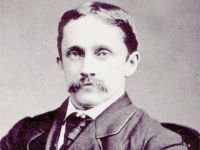
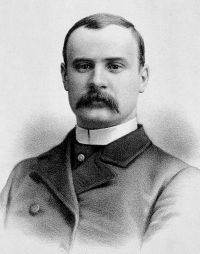
Portrait of Bayard Taylor Bayard Taylor,  A History of Germany from the Earliest Times to the Present Day

“ FREDERICK GOES TO GERMANY.
The young king, who had been educated wholly in Sicily, and who all his life was an Italian rather than a German, was now eighteen years old. He resembled his grandfather, Frederick Barbarossa, in person, was perhaps his equal in strength and decision of character, but far surpassed him or any of his imperial predecessors in knowledge and refinement. He spoke six languages with fluency; he was a poet and minstrel; he loved the arts of peace no less than those of war, yet he was a statesman and a leader of men.
”
Source: Gutenberg

T. F. Tout,  The Empire and the Papacy, 918-1273

“ Europe was now breaking up slowly but surely into the great nations of modern times, and was inevitably losing a good deal of her consciousness of unity in the process. Even Frederick Barbarossa, filled as he was with his dreams of reviving the power of Rome, had been, as we saw, obliged to adopt a different policy in Germany and Italy, and had attained his greatest successes in proportion as he acted most fully as a German national king. ”
Source: Gutenberg

John H. Haaren,  Famous Men of the Middle Ages… (1904)

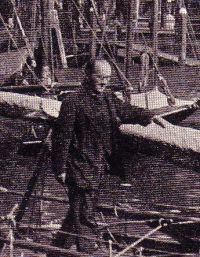
“ He was impatient to join his son, who was leading the advance guard; and when he found that he could not cross immediately by the bridge, he plunged into the river to swim his horse across. Both horse and rider were swept away by the current. Barbarossa’s heavy armor made him helpless and he was drowned. ”
Source: Wikisource

Get perspective with Kwize: daily news enlightened by great literature