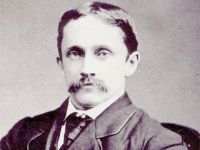
C. R. Conder

C. R. Conder

Summary

Portrait of C. R. Conder C. R. Conder The city of Jerusalem (1909)

The silence is broken suddenly by the musical cry of the Muedhdhin on the minaret of a mosque—a long, rolling, and tremulous note, echoing all over Jerusalem, as he “testifies there is no God but God,” and calls to the faithful that “prayer is better than sleep.” The simple dignity of Islâm contrasts with the superstition, the hurried services, the tawdry magnificence of degraded Eastern churches, and we understand how it was that the reformed faith of Muḥammad conquered Asia. The second scene is that of the summer noon, which presents to us an epitome of the long history of the Holy City.
Source: Gutenberg

Portrait of C. R. Conder C. R. Conder The city of Jerusalem (1909)

The rough cobbles of the slippery market-place are crowded with chattering peasants. A few pious Moslems, unconscious of the world, are praying with their faces towards Mekkah on the steps of the Protestant bishop’s palace, where the town dogs also lie in summer, but go down to the covered bazaar when the winter rains and snow begin. The Armenian patriarch is being escorted, from St. James on Sion to the Holy Sepulchre, by a modest procession. A Moslem bier passes by, and men crowd round it to lend their shoulders for a few steps as a pious act.
Source: Gutenberg

Portrait of C. R. Conder C. R. Conder The city of Jerusalem (1909)

It can never be anything else. Whatever be the outcome of the regeneration of the Turkish empire, Jerusalem can never be a very great centre of trade. It will remain what it has been for so many centuries—the Holy City. To the Jew it is the city of David and Solomon, to the Christian the city where our Lord was crucified, to the Moslem also a city sanctified by many traditions, and by the memory of the proud days when it was won for Islâm by Omar and by Saladin.
Source: Gutenberg

Get perspective with Kwize: daily news enlightened by great literature