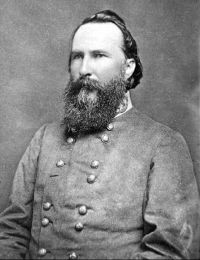
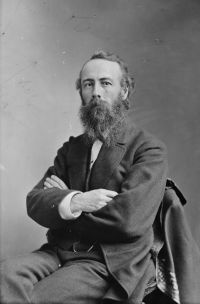
General John Bell Hood

Definition and stakes

1911 Encyclopædia Britannica, Volume 13… (1911)

“ Hood was severely wounded again and his leg was amputated, but after six months he returned to duty undaunted. He remained with the Army of Tennessee as a corps commander, and when the general dissatisfaction with the Fabian policy of General J. E. Johnston brought about the removal of that officer, Hood was put in his place with the temporary rank of general. He had won a great reputation as a fighting general, and it was with the distinct understanding that battles were to be fought that he was placed at the head of the Army of Tennessee. ”
Source: Wikisource

Portrait of John McAllister Schofield John McAllister Schofield,  Forty-Six Years in the Army

“ AVAILABLE TROOPS NOT SENT TO THE FRONT General Thomas appears to have been puzzled by doubt whether Hood would aim for Nashville or some point on the Nashville and Chattanooga Railroad, and not to have realized that his own plan should have been to concentrate all his available force into one army, so as to move against the enemy with the greatest possible force, no matter what the enemy might do. ”
Source: Gutenberg

Portrait of John McAllister Schofield John McAllister Schofield,  Forty-Six Years in the Army

“ By uniting my troops with Stanley's, we were able to hold Hood in check at Columbia and Franklin until General Thomas could concentrate at Nashville, and also to give Hood his death-blow at Franklin. Subsequent operations have shown how little fight was then left in his army, and have taken that little out of it. He now has not more than fifteen thousand infantry, about ten thousand of whom only are armed, and they greatly demoralized. With time to reorganize and recruit, he could not probably raise his force to more than half the strength he had at Franklin. ”
Source: Gutenberg

Get perspective with Kwize: daily news enlightened by great literature