Helmand River

Definition and stakes

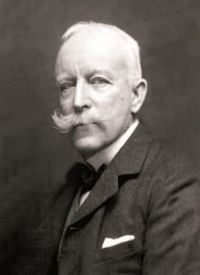
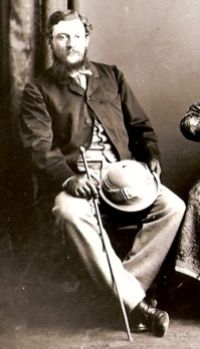
Portrait of Henry Walter Bellew Henry Walter Bellew,  From the Indus to the Tigris (1874)

“ The Helmand here appears quite navigable, and flows in a broad stream, in which are several small islands, covered with a dense jangal of tamarisk.
On the opposite or right bank, the desert cliffs, hitherto abutting direct on the river in its course from Hazárjuft, now recede from it, and leave a gradually expanding alluvium, on which are seen corn-fields, villages, and huts, and extensive ruins. In a northerly direction, beyond this alluvium, extending as far as the eye can reach east and west, is a vast undulating desert waste.
”
Source: Gutenberg

Various,  Encyclopaedia Britannica, 11th Edition…

“ On leaving the hills it enters on a flat country, and extends over a gravelly bed. Here also it begins to be used in irrigation. At Girishk it is crossed by the principal route from Herat to Kandahar. Forty-five miles below Girishk the Helmund receives its greatest tributary, the Arghandab, from the high Ghilzai country beyond Kandahar, and becomes a very considerable river, with a width of 300 or 400 yds. and an occasional depth of 9 to 12 ft. Even in the dry season it is never without a plentiful supply of water. ”
Source: Gutenberg

1911 Encyclopædia Britannica (1911)

“ The name as now used does not include the valley of the Herat river; on the south the limit seems to be the declivity of the higher mountains dominating the descent to the lower Helmund, and the road from Farah to Kandahar. It is in Ghor that rise all those affluents of the closed basin of Seistan, the Hari-rud, the Farah-rud, the Khash-rud, besides other considerable streams joining the Helmund above Girishk. ”
Source: Wikisource

Get perspective with Kwize: daily news enlightened by great literature