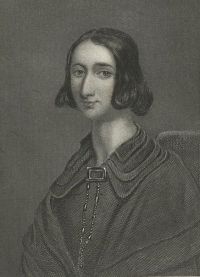
Isabella I of Castile

Definition and stakes

Great Men and Famous Women. Vol…

But the same people who had said "Isabella shall be the heir-apparent," said now "Isabella shall rule over us," and conquered. The reign of Isabella, therefore, dates from 1479, when she was left in undisputed possession of her throne, rather than from 1474, when she wore her crown for the first time in Segovia. The same year that brought peace to the Queen of Castile elevated Ferdinand to the throne of Aragon.
No more important epoch marks the history of Spain than the union of the crowns of Castile and Aragon; it meant the end of petty principalities and powers, it meant united Spain.
Source: Gutenberg

1911 Encyclopædia Britannica, Volume 14… (1911)

ISABELLA (1451–1504) , surnamed la Catolica, “the Catholic,” queen of Castile, was the second child and only daughter of John II. of Castile by his second wife Isabella, granddaughter of John I. of Portugal (thus being through both parents a descendant of John of Gaunt) , and was born at Madrigal on the 22nd of April 1451. On the death of her father, who was succeeded by her brother Henry IV. (1454) , she was withdrawn by her mother to Arevalo, where her early education was conducted in the deepest seclusion
Source: Wikisource

1911 Encyclopædia Britannica, Volume 14… (1911)

Finally however, in face of very great difficulties, she was married to Ferdinand of Aragon at Valladolid on the 19th of October 1469. Thence forward the fortunes of Ferdinand and Isabella were inseparably blended. For some time they held a humble court at Dueñas, and afterwards they resided at Segovia, where, on the death of Henry, she was proclaimed queen of Castile and Leon (December 13, 1474) . Spain undoubtedly owed to Isabella’s clear intellect, resolute energy and unselfish patriotism much of that greatness which for the first time it acquired under “the Catholic sovereigns.”
Source: Wikisource

Get perspective with Kwize: daily news enlightened by great literature