James Graham, 1st Marquess of Montrose

Definition and stakes

1911 Encyclopædia Britannica, Volume 18… (1911)

For a time Montrose retired, perforce, from public life. After the Civil War began in England (see Great Rebellion) he constantly pressed Charles to allow him to make a diversion in Scotland. Hamilton’s impracticable policy of keeping Scotland neutral for long stood in the way of Charles’s consent. But in 1644, when a Scottish army entered England to take part against the king, Montrose, now created a marquess, was at last allowed to try what he could do. He set out to invade Scotland with about 1000 men.
Source: Wikisource

1911 Encyclopædia Britannica, Volume 18… (1911)

The good marquess died in 1669, and was succeeded by his son James, 3rd marquess of Montrose (d. 1684) . The 4th marquess, son of the last mentioned, who was also named James (d. 1742) , was lord high admiral of Scotland in 1705, and lord president of the council in 1706. He was an ardent supporter of the Hanoverian succession; he also favoured the union of Scotland with England, for his services in regard to which he was created duke of Montrose and marquess of Graham in 1707, becoming in the same year one of the first representative peers of Scotland in the parliament of Great Britain.
Source: Wikisource

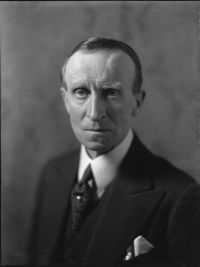
Portrait of John Buchan John Buchan A Book of Escapes And Hurried Journeys… (1922)

James Graham, the first Marquis of Montrose, began his marvellous career at the age of thirty-two, and crowded into two years the campaigns which made him master of Scotland. He died on the scaffold when he was only thirty-eight, leaving behind him the reputation of perhaps the greatest soldier ever born north of the Tweed, and certainly one of the purest and most chivalrous figures in his country's annals. Few men have ever covered country with his lightning speed, and the whole tale of his exploits is a tale of escapes and hurried journeys.
Source: Wikisource

Get perspective with Kwize: daily news enlightened by great literature