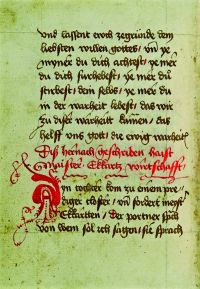
John Eckhart

Definition and stakes

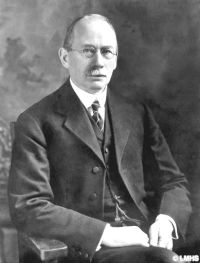
Portrait of William Ralph Inge William Ralph Inge,  Christian Mysticism

“ This birth of the Son in the soul has a double aspect—the "eternal birth," which is unconscious and inalienable, [256] but which does not confer blessedness, being common to good and bad alike; and the assimilation of the faculties of the soul by the pervading presence of Christ, or in other words by grace, "quæ lux quædam deiformis est," as Ruysbroek says. The deification of our nature is therefore a thing to be striven for, and not given complete to start with; but it is important to observe that Eckhart places no intermediaries between man and God. ”
Source: Gutenberg

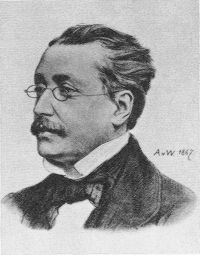
Portrait of Andrew Seth Pringle-Pattison Andrew Seth Pringle-Pattison,  1911 Encyclopædia Britannica (1911)

“ It was largely a devotional aid to the realization of present union with God; and, so far as it was theoretical, it was a theory of the faculties by which such a union is attainable. Mysticism was pieced on somewhat incongruously to a scholastically accepted theology; the feelings and the intellect were not brought together. But in Eckhart the attitude of the churchman and traditionalist is entirely abandoned. Instead of systematizing dogmas, he appears to evolve a philosophy by the free exercise of reason. His system enables him to give a profound significance to the doctrines of the Church ”
Source: Wikisource

Portrait of William Ralph Inge William Ralph Inge,  Christian Mysticism

“ The idea of the world-history as a gradual realisation of the Divine Personality was foreign to Eckhart's thought. Stöckl, indeed, tries to father upon him the doctrine that the human mind is a necessary organ of the self-development of God. But this theory cannot be found in Eckhart. The "necessity" which impels God to "beget His Son" is not a physical but a moral necessity. "The good must needs impart itself," he says. [242] The fact is that his view of the world is much nearer to acosmism than to pantheism. "Nothing hinders us so much from the knowledge of God as time and place," he says. ”
Source: Gutenberg

Get perspective with Kwize: daily news enlightened by great literature