John III of Portugal

Definition and stakes

1911 Encyclopædia Britannica, Volume 15… (1911)

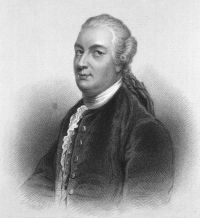
Succeeding to the crown at a time when Portugal was at the height of its political power, and Lisbon in a position of commercial importance previously unknown, John III., unfortunately for his dominions, became subservient to the clerical party among his subjects, with disastrous consequences to the commercial and social prosperity of his kingdom.
Source: Wikisource

1911 Encyclopædia Britannica, Volume 15… (1911)

JOHN V. (1689–1750) , king of Portugal, was born at Lisbon on the 22nd of October 1689, and succeeded his father Pedro II. in December 1706, being proclaimed on the 1st of January 1707. One of his first acts was to intimate his adherence to the Grand Alliance, which his father had joined in 1703. Accordingly his general Das Minas, along with Lord Galway, advanced into Castile, but sustained the defeat of Almanza (April 14) . In October 1708 he married Maria Anna, daughter of Leopold I., thus strengthening the alliance with Austria
Source: Wikisource

Kingsley Garland Jayne and Edgar Prestage 1911 Encyclopædia Britannica (1911)

D. John appealed for help to Great Britain, which sent him 6000 men, under Sir Charles Stuart and a subsidy of £200,000. Though Spain, through the influence of D. John’s father-in-law Charles IV., still remained neutral, a state of war between Portugal and France existed until 1799. D. John then reopened negotiations with Napoleon, and Lucien Bonaparte was sent to dictate terms in Madrid. But D. John dared not consent to close the harbours of Portugal against British ships. England was the chief market for Portuguese Wine and grain
Source: Wikisource

Get perspective with Kwize: daily news enlightened by great literature