“ When fell clouds around ye lower, Mark! oh mark his magic power. Great King Cotton. Feeding hundreds is his pleasure, Aye, and thousands at his leisure; For his wealth is without measure, Far surpassing Northern treasure. ”
King Cotton
Definition and stakes
The theme of “King Cotton” has been addressed by authors such as Frederick Law Olmsted, Sara Ware Bassett, Anonymous, Andreas Wilhelm Cramer and Charles Ball. It is often associated with terms like states, England, slave, planter and Thomas.
Quotes about “King Cotton”
Masterpieces of Negro Eloquence
“ Since, if I may borrow the idea, the nation has caught the old inspiration from his lips and written it in the new organic world. Less than twenty-five years ago slavery clasped hands with King Cotton, and said slavery fights and cotton conquers for American slavery. Since then slavery is dead, the colored man has exchanged the fetters on his wrist for the ballot in his hand. Freedom is king, and Cotton a subject. ”
Charles Morris, Historic Tales: The Romance of Reality…
“ In the harvest season of the cotton States of the South a vast, fleecy snow-fall seems to have come down in the silence of the night and covered acres innumerable with its virgin emblem of plenty and prosperity. It is the regal fibre which is to set millions of looms in busy whirl and to clothe, when duly spun and woven, half the population of the earth. That "cotton is king" has long been held as a potent political axiom in the United States, yet there was a time when cotton was not king, but was an insignificant member of the agricultural community. ”
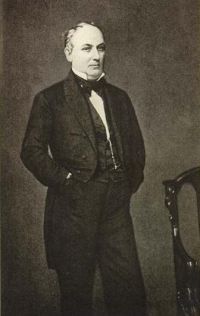 James Henry Hammond,
On the Admission of Kansas Under the Lecompton Constitution
James Henry Hammond,
On the Admission of Kansas Under the Lecompton Constitution
“ What would happen if no cotton was furnished for three years? I will not stop to depict what every one can imagine, but this is certain: England would topple headlong and carry the whole civilized world with her, save the South. No, you dare not make war on cotton. No power on earth dares to make war upon it. Cotton is king. Until lately the Bank of England was king, but she tried to put her screws as usual, the fall before last, upon the cotton crop, and was utterly vanquished. The last power has been conquered. Who can doubt that has looked at recent events, that cotton is supreme? ”
Cotton is King, and Pro-Slavery Arguments
“ King Cotton cares not whether he employs slaves or freemen. It is the cotton, not the slaves, upon which his throne is based. Let freemen do his work as well, and he will not object to the change. The efforts of his most powerful ally, Great Britain, to promote that object, have already cost her people many hundreds of millions of dollars, with total failure as a reward for her zeal; and she is now compelled to resort to the expedient of employing the slave labor of Africa, to meet the necessities of her manufacturers. One-sixth of the colored people of the United States are free ”
Cotton is King, and Pro-Slavery Arguments
“ Slavery, thus intrenched in the midst of such powerful allies, and without competition in tropical cultivation, has become the sole reliance of King Cotton. Lest the sources of his aggrandisement should be assailed, we can well imagine him as being engaged constantly, in devising new questions of agitation, to divert the public from all attempts to abandon free trade and restore the protective policy. ”
Various, The Continental Monthly , Vol. 2 No…
“ Prosperity had made him giddy. Cotton was not merely King—it was God. Moral considerations were nothing. The sentiment of right, he argued, would have no influence over starving operatives; and England and France, as well as the Eastern States of the Union, would stand aghast and yield to the masterstroke which should deprive them of the material of their labor. Millions were dependent on it in all the great centres of civilization, and the ramifications of its power extended into all ranks of society and all departments of industry and commerce. ”
Various, The Atlantic Monthly, Volume 07…
“ It is well, therefore, sometimes to withdraw a little from the dust and smoke of the battle, which, with us at least, announces the spread of this potentate's power, and to try to disentangle the real questions at issue in the struggle from the eternal complications produced by short-sighted politicians and popular issues. Looking at the policy and tendency of the reign of King Cotton, as hitherto developed and indicated by its most confidential advisers and apostles and by the lapse of time in the so-called Slave States, to what end does it necessarily tend? ”
Preston Lafayette Ledford, Reminiscences of the Civil War… (1909)
“ The old man at the mill would [21] pleasantly speak to the little girls, addressing them as his smart little boys. The little girls proud of the distinction would saucily and laughingly answer him saying, “Yes we are Tomboys.”Cotton King.—Cotton proved to be king indeed, and upon this staple the south depended largely for clothing, bed clothing, tent cloths and indeed everything for which cloth was used. The women took the lint or raw material and by carding, spinning, weaving, cutting and sewing converted it into clothing, bed clothing and many other articles. ”
Various, The Atlantic Monthly, Volume 07…
“ Thus over nearly half of the national domain and among a large minority of the citizens of the Republic, the dynasty of Cotton has worked a divergence from original principle. Wherever the sway of King Cotton extends, the people have for the present lost sight of the most essential of our national attributes. ”
Charles William Burkett, Agriculture for Beginners
“ Although cotton was cultivated on the Eastern continent before America was discovered, this crop owes its present kingly place in the business world to the zeal and intelligence of its American growers. So great an influence does it wield in modern industrial life that it is often called King Cotton. Thousands upon thousands of people scan the newspapers each day to see what price its staple is bringing. ”
Cotton is King, and Pro-Slavery Arguments
“ King Cotton is a profound statesman, and knows what measures will best sustain his throne. He is an acute mental philosopher, acquainted with the secret springs of human action, and accurately perceives who can best promote his aims. ”
Various, The Continental Monthly, Vol. 2…
“ The Southern press has proposed that, even in case of defeat, the wealthy class shall retire to their plantations, 'live comfortably' on what they can raise, let cotton go for two years, and thereby starve Europe and the North into a conviction that Cotton is King.But how will the poor whites of the South like this? What is to become of them? Or what, indeed, is to become of us, if no cotton be forthcoming? The truth is, and every day makes it more apparent, the raising of cotton must pass into other hands. ”
Cotton is King, and Pro-Slavery Arguments
“ A distinguished citizen of our own State, than whom none can be better qualified to form an opinion, has lately stated that our great staple, cotton, has contributed more than any thing else of later times to the progress of civilization. By enabling the poor to obtain cheap and becoming clothing, it has inspired a taste for comfort, the first stimulus to civilization. Does not self-defense, then, demand of us steadily to resist the abrogation of that which is productive of so much good? It is more than self-defense. ”
Cotton is King, and Pro-Slavery Arguments
“ The factories of Europe would fall with a concussion that would shake down castles, palaces, and even thrones; while the "purse-proud, elbowing insolence" of our Northern monopolist would soon disappear forever under the smooth speech of the pedlar, scourging our frontiers for a livelihood, or the bluff vulgarity of the South Sea whaler, following the harpoon amid storms and shoals. Doubtless the abolitionists think we could grow cotton without slaves, or that at worst the reduction of the crop would be moderate and temporary. ”
Cotton is King, and Pro-Slavery Arguments
“ Let any great social or physical convulsion visit the United States, and England would feel the shock from Land's End to John O'Groats. The lives of nearly two millions of our countrymen are dependent upon the cotton crops of America; their destiny may be said, without any kind of hyperbole, to hang upon a thread. Should any dire calamity befall the land of cotton, a thousand of our merchant ships would rot idly in dock; ten thousand mills must stop their busy looms; two thousand thousand mouths would starve, for lack of food to feed them. ”
Various, The Continental Monthly, Vol. 2…
“ In this, much employment could be given to the non-slaveholding masses, while military qualities of supposed superiority would enable the Southern Confederacy to enter into a successful contest with the North for empire. The potency of 'King Cotton' was to be made the powerful agency with which the rest of the civilized world was to be dragooned into acquiescence. ”
Cotton is King, and Pro-Slavery Arguments
“ We, and such as we, who are content to look upon society as Providence allows it to exist—to mend it when we can, but not to distress ourselves immoderately for evils which are not of our creation—we see only the free and intelligent English families who thrive upon the wages which these cotton bales produce. Lord Brougham sees only the black laborers who, on the other side of the Atlantic, pick the cotton pods in slavery. ”
Various, The Atlantic Monthly, Volume 07…
“ Fit for freedom at present they are not, and, under the existing policy of the Cotton dynasty, never can be. "Whether under any circumstances they could become so is not here a subject of discussion; but, surely, the day will come when the white caste will wish the experiment had been tried. The argument of the Cotton King against the alleviation of the condition of the African is, that his nature does not admit of his enjoyment of true freedom consistently with the security of the community, and therefore he must have none. ”
 Brigham Young,
Journal of Discourses — Volume 10…
Brigham Young,
Journal of Discourses — Volume 10…
“ It has been said "Cotton is king." Everybody who knows anything of mankind knows they had to live a great many years without cotton. The first cotton factories were started in America within my remembrance. What would the Indians here, who are all but naked, say if they were told cotton is king? They would say, "No, biscuit, biscuit," that which will sustain life. They can kill rabbits, and make clothing of the skins. Bread is king. ”
Cotton is King, and Pro-Slavery Arguments
“ It has long been a vital question to the success of the slaveholder, to know how he could render the labor of his slaves the most profitable. The grain growing States had to emancipate their slaves, to rid themselves of a profitless system. The cotton-growing States, ever after the invention of the cotton gin, had found the production of that staple highly remunerative. The logical conclusion, from these different results, was, that the less provisions, and the more cotton grown by the planter, the greater would be his profits. ”
Cotton is King, and Pro-Slavery Arguments
“ The profits derived by her, from the purchase and manufacture of slave labor cotton, constitute so large a portion of the means of her prosperity, that the Government could not sustain itself were the supplies of this article cut off. It is easy to divine, therefore, why the people of England are boundless in their denunciation of American slavery, while not a single remonstrance goes up to the throne, against the importation of American cotton. ”
Cotton is King, and Pro-Slavery Arguments
“ As new grazing and grain-growing States are developed, and teem with their surplus productions, the mechanic is benefited, and the planter, relieved from food-raising, can employ his slaves more extensively upon cotton. It is thus that our exports are increased; our foreign commerce advanced; the home markets of the mechanic and farmer extended, and the wealth of the nation promoted. It is thus, also, that the free labor of the country finds remunerating markets for its products—though at the expense of serving as an efficient auxiliary in the extension of slavery! ”
John D. Sherwood, The comic history of the United States… (1869)
“ Cotton will be more than king,—will be a good 549thrifty farmer, replacing broom-sedgy fields with smiling furrows, razor-backed hogs with blooded stock, and will stand out in round completeness, not isolated by a heritage which kept it aloof from the world, but linked in a rosy chain of productive good with the happy brotherhood of work, prosperity, and well-doing. ”
Cotton is King, and Pro-Slavery Arguments
“ Capital and labor, in Europe and America, are largely employed in the manufacture of cotton. These goods, to a great extent, may be seen freighting every vessel, from Christian nations, that traverses the seas of the globe; and filling the warehouses and shelves of the merchants over two-thirds of the world. By the industry, skill, and enterprise employed in the manufacture of cotton, mankind are better clothed; their comfort better promoted; general industry more highly stimulated; commerce more widely extended; and civilization more rapidly advanced than in any preceding age. ”
Cotton is King, and Pro-Slavery Arguments
“ There is nothing in the history of commerce that can be compared with the increased demand for this staple, notwithstanding the restrictions by which this Government has limited that demand. As cotton, tobacco, and rice, are produced only on a small portion of the globe, while all other agricultural staples are common to every region of the earth, this circumstance gave the planting States very great advantages. To cap the climax of the commercial advantages opened to the cotton planters, England, their great and most valued customer, received their cotton under a mere nominal duty. ”
Cotton is King, and Pro-Slavery Arguments
“ As each had products to sell, peculiar to itself, the advantages often gained by one were no detriment to the others. The principal articles demanded by this increasing commerce have been coffee, sugar, and cotton, in the production of which slave labor has greatly predominated. Since the enlargement of manufactures, cotton has entered more extensively into commerce than coffee and sugar, though the demand for all three has advanced with the greatest rapidity. England could only become a great commercial nation, through the agency of her manufactures. ”
Cotton is King, and Pro-Slavery Arguments
“ Their advancement in moral character would have put to shame the advocate for the perpetuation of slavery. Indeed, there could have been no plausible argument found for its continuance. No regular exports of cotton, no cultivation of cane sugar, to give a profitable character to slave labor, had any existence when Jay and Franklin commenced their labors, and when Congress took its first step for the suppression of the slave trade.Unfortunately, the free colored people persevered in their evil habits. ”
 Charles A. Beard,
History of the United States
Charles A. Beard,
History of the United States
“ The area devoted to cotton had swiftly expanded as Alabama, Mississippi, and Louisiana were opened up. Cotton had in fact become "king" and the planters depended for their prosperity, as they thought, upon the sale of their staple to English manufacturers whose spinning and weaving mills were the wonder of the world. Manufacturing nothing and having to buy nearly everything except farm produce and even much of that for slaves, the planters naturally wanted to purchase manufactures in the cheapest market, England, where they sold most of their cotton. ”
Various, Birds and All Nature, Vol. 7, No…
“ So two-thirds of our cotton goes to England. The cotton we ship sells for more than all our flour. Cotton is still king.In our civil war we came very near being thrown into conflict with England by an entanglement of the same fiber which caught the black man. One of the greatest industries of England in 1861-5 was cotton manufacture, and when we, by our blockade system, closed the southern ports so cotton could not be carried out, we nearly shut down all the works in that country where cotton was made up. That meant hard times to many towns and suffering to many families. ”
Cotton is King, and Pro-Slavery Arguments
“ Heretofore they have sold their slaves at will, as well as their captives taken in war, to the slave traders. Now they are to be taught a different policy by Englishmen; and the African slaveholders are to be convinced that they [114] will make more money by employing their slaves in growing cotton, than in selling them to be carried off to the American planters. This done, and the transportation of laborers to the United States will be prevented. This will put it out of the power of our planters, to increase their production of cotton so as to reduce prices ”
Related terms
Authors who wrote about “King Cotton”
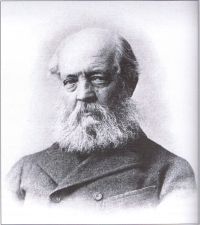 Frederick Law OlmstedSara Ware BassettAnonymousAndreas Wilhelm Cramer
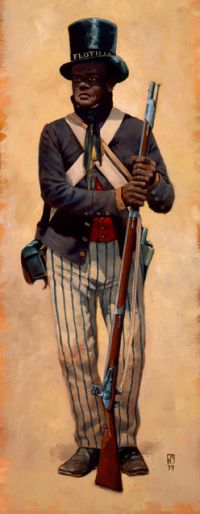 Charles BallChristopher Parkinson Brooks
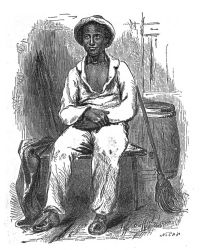 Solomon NorthupCharles MorrisUnited States. Work Projects AdministrationJames Henry HammondJohn D. SherwoodEdward EdwardsRoger Williams
 W. E. B. Du BoisClive DayCharles William BurkettCotton NoeVarious
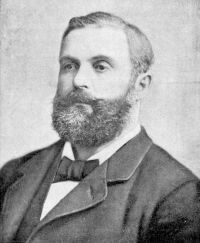 Thomas Wallace KnoxCharles Cotton