Krafft-Ebing

Definition and stakes

R. von Krafft-Ebing,  Psychopathia sexualis: With especial reference to contrary sexual instinct

“ When twenty-six years old, he first began to have sexual intercourse with men, toward whom he felt like a woman. Even as a child, it was his greatest delight to put on female attire. He was often chastised by his father because, in the effort to satisfy this impulse, he put on his sister’s clothing. If he happened to see a ballet, only the male dancers interested him. Since he could remember, he had had a horror feminæ. If he happened to visit a brothel, it was only to see young men. He was, indeed, a rival of prostitutes. If he saw a young man, he just looked at his eyes ”
Source: Gutenberg

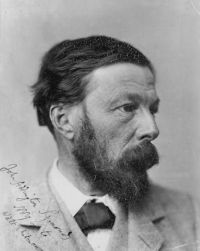
Portrait of John Addington Symonds John Addington Symonds,  A Problem in Modern Ethics

“ Of the many who live thus during the years of adolescence, some have undoubtedly as bad a family record as the worst of Krafft-Ebing's cases show. Finally, as regards the onanism which is a marked characteristic of some adult Urnings, this must be ascribed in most cases to the repression of their abnormal instincts. They adopt the habit, as Krafft-Ebing himself says, faute de mieux. [26]
In justice to the theory I am criticising, it ought to be remarked that Krafft-Ebing does not contend that wherever hereditary taint and onanism concur, the result will be sexual inversion
”
Source: Gutenberg

Portrait of John Addington Symonds John Addington Symonds,  A Problem in Modern Ethics (1896)

“ Krafft-Ebing asserts that hardly any of these Urnings are conscious of morbidity. They look upon themselves as unfortunate mainly because law and social prejudices stand in the way of their natural indulgence. [12] He also takes for proved, together with all the authorities he cites, that the abnormal sexual appetite is constitutional and inborn.
Krafft-Ebing, as might have been expected, refers the phenomenon to functional degeneration, dependent upon neuropathical conditions in the patient, which are mainly derived from hereditary affliction.
”
Source: Wikisource

Get perspective with Kwize: daily news enlightened by great literature