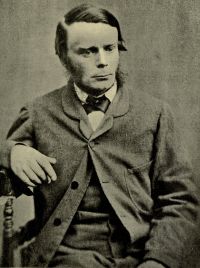
“ Mackworth, will nothing induce him to move his vast machinery in our cause?""I am all attention, my lord.""In case of our finding Charles, then?""Yes," said Mackworth, calmly."Twenty thousand?""No," said Mackworth. "It wouldn't do. Twenty million wouldn't do. You see there is a difference between a soldier disguising himself, and going into the enemy's camp, to lie, and it may be, murder, to gain information for his own side, and the same soldier deserting to the enemy, and giving information. The one is a hero, and the other a rogue. I am a hero. ”
Quotes about “Mackworth”
“ Mackworth went on—"One of my earliest recollections, my lord, is of being at a French lycée.""The fault of those establishments," said Lord Saltire, pensively, "is the great range of subjects which are superficially taught. I ask pardon for interrupting you. Do you take snuff?"Mackworth declined, with great politeness, and continued—"I was taken to that school by a footman in livery.""Upon my honour, then, I owe you an apology. I thought, of course, that the butler had gone with you. But, in a large house, one never really knows what one's people are about." ”
“ Under the dark porch they found a group of three—Mackworth; [Pg 76] a jolly-looking, round-faced, Irish priest, by name Tiernay; and Mary. Mackworth received Charles with a pleasant smile, and they joined in conversation together heartily. Few men could be more agreeable than Mackworth, and he chose to be agreeable now. Charles was insensibly carried away by the charm of his frank, hearty manner, and for a time forgot who was talking to him.Mackworth and Charles were enemies. If we reflect a moment, we shall see that it could hardly be otherwise. ”
“ Father Mackworth saw soon that Ravenshoe was a comfortable home for him, but that his power was gone. Unless!And yet he knew he could exercise a power little dreamt of. It is in the power, possibly, of a condemned man to burn the prison down, and possibly his interest; but he has compunctions. Mackworth tried to persuade himself that the reason he did not use his power was that it would not be advisable. He was a cipher in the house, and knew by instinct that he would never be more. But in reality, I believe, he let his power sleep for Cuthbert's sake. ”
“ Mackworth was not an ill-natured man when he was not opposed, and, being a brave man himself, could well appreciate bravery in others. He had knowledge enough of men to know that the revelation of to-day had been as bitter a blow to a passionate, sensitive man like Charles, as he could well endure and live. ”

“ It is because this day thou must challenge the Duke of Alban before the King. The Earl of Mackworth has laid all his plans and the time is now ripe. Knowest that thy father is at Mackworth House?” “Nay,” said Myles; “I knew it not.” “He hath been there for nearly two days,” said the Prince. “Just now the Earl hath sent for us to come first to Mackworth House. Then to go to the palace, for he hath gained audience with the King, and hath so arranged it that the Earl of Alban is to be there as well. We all go straightway; so get thyself ready as soon as may be.” ”
H. L. Sayler, Battling the Bighorn; or, The Aeroplane in the Rockies
“ Mackworth, his smile unchanged. Then his smile faded and he gave each boy a straight look. “Young men,” he said slowly, “the men before you who are so carefully dressed are not ‘dolls’ and [77] each has considerable ‘else to do.’ They have seen fit to make themselves comfortable in certain clothing as you boys have seen fit to do the same thing in your own way. But you may be sure than neither of them would have commented on that loose button on your shirt, Frank, or that spot on your collar, Phil.” ”
“ He held an open letter towards Mackworth, and said—"This is from Lord Saltire. He proposes to come here the night before the funeral and go away in Lord Segur's carriage with him after it is over. Will you kindly see after his rooms, and so on? Here is the letter.""I will," said Mackworth. "My dear boy, you look deadly ill.""I wish I were dead.""So do all who hope for heaven," said Mackworth."Who would not look worn and ill with such a scene hanging over their heads?""Go away and avoid it.""Not I. A Ravenshoe is not a coward. Besides, I want to see him again. How cruel you have been! ”
“ I would, for your sake, Charles, have committed an act of villainy which would have entailed a life's remorse, and have robbed William, my own brother, of his succession. You see what a poor weak rogue I am, and what a criminal I might become with a little temptation. Father Mackworth did his duty and refused me. I tell you this to show you that he is, at all events, sincere enough in his conviction of the truth of this.""You acted like yourself, Cuthbert. Like one who would risk body and soul for one you loved." ”
William Prideaux Courtney, Dictionary of National Biography… (1893)
“ MACKWORTH, Sir HUMPHRY (1657–1727) , politician and capitalist, second son of Thomas Mackworth of Betton Orange, Shropshire, who married Anne, daughter and heiress of Richard Bulkeley of Buntingsdale in the same county, was born in January 1657. ”
H. L. Sayler, Battling the Bighorn; or, The Aeroplane in the Rockies
“ Mackworth, smiling as usual, after returning. “We have trout, grouse, deer, moose, goats and, undoubtedly, plenty of bear. And we are near enough to get ice from Michel by our aërial express.”“I think we could get some sheep,” remarked Frank significantly. “We can take you as far into the mountains as you want to go.”“O, we’ll move along in a day or two,” remarked Mr. Mackworth. “There’s no hurry. We must do a little mountain climbing just for the experience. This sort of camp life is too easy; a pack camp’ll be more like the real thing.” ”
H. L. Sayler, Battling the Bighorn; or, The Aeroplane in the Rockies
“ Mackworth nodded his head.“Lord Pelton has just left the university. The family estates are in Staffordshire. Of course, he is rich; but that is neither here nor there. He loves the outdoor life; is a yachtsman and especially fond of shooting. He was after tigers in India when I met him, both of us guests of Captain Ludington. The captain, as you can guess, is an army man. He is in the India service and just home on leave. He’s really the one that put us up to this trip. He has heads, horns and skins enough to start a taxidermist shop. ”
H. L. Sayler, Battling the Bighorn; or, The Aeroplane in the Rockies
“ Mackworth and Mr. Graham jointly maintained a trout camp on the Little Manistee, and Frank’s uncle or some of his eastern friends were pretty sure to be there in June of each [42] year. Now and then Mr. Mackworth came out in the fall for the partridge shooting.Frank’s uncle was an unusual man and, as can be surmised from the exclusive club he frequented (most of the members of which are big game hunters in all parts of the world) , he was an assiduous sportsman. A man of extensive means and a seeker of big and rare game, he pursued his hobby in all sections of the globe. ”
H. L. Sayler, Battling the Bighorn; or, The Aeroplane in the Rockies
“ Mackworth’s prize and the other Captain Ludington’s. None but males were shot. Sam Skinner brought down a young buck deer for fresh meat.“That was pretty strenuous,” said Mr. Mackworth as the pipes came out after dinner. “I suggest a rest to-morrow and another trip to Josephine Falls the day after.”In the afternoon of the next day the boys and Lord Pelton made a trip to Michel in the Loon to get more of the May trout flies which Phil had found so successful. Some fresh venison was carried to Nelse and Robert, and two hundred pounds of ice was brought back. ”
 Arthur Wing Pinero,
The Big Drum: A Comedy in Four Acts
Arthur Wing Pinero,
The Big Drum: A Comedy in Four Acts
“ Sir Timothy. [Lighting his cigarette.] At a loss, are you! [Warmly.] You're at a loss to understand that I'm not the sort of man who'd steal a march upon another where a woman's concerned, and take advantage of his misfortunes in a dirty manner! [Coming to Philip.] Mackworth—I'll drop the Mister, if you've no objection—Mackworth, I promise you I won't move a step till I have your assurance that your split with Madame de Chaumié is a mortal one, and that the coast is open to all comers. ”
H. L. Sayler, Battling the Bighorn; or, The Aeroplane in the Rockies
“ Mackworth. “When we are all in camp near Smith’s place we are going to stop two or three days to get acclimated. We’ll also cross the ridge there and have a day’s sport at Josephine Falls on the Fording, where I hope we’ll get enough trout to give Jake a chance to give us a ‘balsam bake.’”“It’ll be my first trout,” interrupted Lord Pelton. [169] “But not your last, I’ll bet,” went on Mr. Mackworth. “While we are enjoying ourselves our guides will be sorting over our outfit for the pack horses. The wagons will stop here. When we leave Smith’s we’ll leave trails and civilization behind. ”
“ At this point Lord Hainault said, "What is that?" and left the room. Lord Saltire and Mackworth were alone together. [Pg 338] "Now, my dear sir," said Lord Saltire, "I am glad you have spoken merely as a man of the world. It makes matters so much easier. You could help us if you would."Mackworth laughed. "Of course I could, my lord. I could bring the whole force of the Catholic Church, at my back, to give assistance. With our powers of organisation, we could discover all about the marriage in no time (if it ever took place, which I don't choose to believe just now) . ”
H. L. Sayler, Battling the Bighorn; or, The Aeroplane in the Rockies
“ The Englishmen made the lad a hero in spite of himself. It was doubtful if one man could have carried away any considerable amount of the plunder that had been heaped up near the door of the car. But each of Mr. Mackworth’s guests had a most elaborate and expensive shooting outfit, and each seemed convinced that Frank had saved his own particular property.As Frank was a member of the party, the tactful Captain Ludington and Lord Pelton recognized that they could not express their gratitude in money. ”
The World's Greatest Books — Volume 05…
“ Charles at once asked for proofs and witnesses, and Mackworth took up the tale."Your mother was Norah, James Horton's wife. James Horton was Densil Ravenshoe's half-brother, and the illegitimate son of Peter. She confessed to me the wicked fraud she practised, and has committed that confession to paper. I hold it. You have not a point of ground to stand on. You have been living in luxury and receiving an expensive education when you should have been cleaning out the stable." ”
H. L. Sayler, Battling the Bighorn; or, The Aeroplane in the Rockies
“ Mackworth as the feast progressed, “Captain Ludington and I have marvelous heads of both goats and sheep, and Lord Pelton has a prize that will never be duplicated in the head and horns of Husha the Black Ram. But we could not have had these if it had not been for our young friends. Therefore,” he continued enthusiastically, “I propose a toast: Here’s to Frank Graham and Phil Ewing—may they be as successful [280] in life as they have been in ‘Battling the Bighorn!’” ”
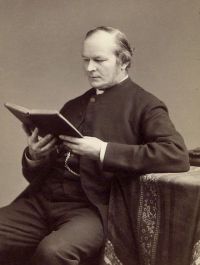 F. W. Farrar,
St. Winifred's; or, The World of School
F. W. Farrar,
St. Winifred's; or, The World of School
“ There was a corrosive malice in this speech so intense that Kenrick never saw Mackworth without recalling the shame and anguish it had caused. Fresh from home, full of quick sensibility, feeling ridicule with great keenness, Kenrick was too much pained by these words even for anger. ”
Arthur Wing Pinero,
The Big Drum: A Comedy in Four Acts
“ Philip. [Ignoring Sir Randle's hand—reading.] "The extraordinary stir, which we venture to prophesy will not soon be eclipsed, made by Mr. Philip Mackworth's recent novel, 'The Big Drum,' lends additional interest to the announcement of his forthcoming marriage to the beautiful Madame de Chaumié—" [The bell rings. He listens to it, and then goes on reading.] ”
William Prideaux Courtney, Dictionary of National Biography… (1893)
“ A large sum of money was raised by lottery in 1698 and 1699 for carrying on these undertakings, and was spent in the construction of quays, canals, and docks; but the scheme received so much opposition from local sources that in December 1705 several servants of Sir Edward Mansel, an adjoining proprietor, were brought before the House of Commons for breaches of privilege against Mackworth. By 1709, when their capital had been sunk, the members of the corporation quarrelled among themselves; William Waller, the manager, was discharged, and Mackworth was accused by his enemies of peculation. ”
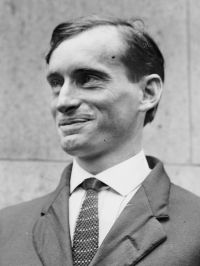
“ My next to my last college year was drawing to a close. Not that I was a graduate ... my course was a special one, and I had not followed even that closely."If you'll graduate," Jarvis Alexander Mackworth urged me, joking in the Kansas fashion, "I will present you with a great bouquet of beauty roses.... I'd like to see you vindicate Langworth's and my judgment of you. For you have many, many professors and people on the Hill who don't believe in you, and, frankly,—say it was a mistake ever to have let you in." ”
Arthur Wing Pinero,
The Big Drum: A Comedy in Four Acts
“ Sir Randle. Ha! An extract from a novel of Mr. Mackworth's apparently! Lady Filson. [Harshly.] Ha, ha, ha, ha——! Ottoline. [Turning sharply and coming forward.] Sssh! Don't you sneer, mother! Don't you sneer, Dad! [Her eyes flashing.] C'est au-dessus de vous de sentir ce qu'il y a d'élevé et de grand! [Fiercely.] Tenez! Qu'il vous plaise ou non——! [She is checked by the entrance of Underwood from the hall. Underwood. [Addressing the back of Lady Filson's head.] Mr. Philip Mackworth, m'lady. Lady Filson. [Straightening herself.] Not for me. [Firmly.] For Madame de Chaumié. ”
“ Charles and the priest walked thoughtfully home together."Allow me to say, Ravenshoe," said the priest, "that, as an Irishman, I consider myself a judge of remarkable establishments. I must say honestly that I have seldom or never met with a great house with so many queer elements about it as yours. You are all remarkable people. And, on my honour, I think that our friend Mackworth is the most remarkable man of the lot." ”
“ Another noticeable fact was that Father Mackworth's sarcasms were turned off with a good-natured laugh, and that battle was on all occasions refused to the worthy priest. In short, Charles, away from company and dissipation, was himself. The good, worthy fellow, whom I learnt to like years ago. The man whose history I am proud to write.Lord Saltire had arrived meanwhile; he had written to Densil, to say that he was horribly bored; that he wished, as an ethical study, to settle, once for all, the amount of boredom a man could stand without dying under it ”
 Winthrop Mackworth Praed,
The poems of Winthrop Mackworth Praed…
(1886)
Winthrop Mackworth Praed,
The poems of Winthrop Mackworth Praed…
(1886)
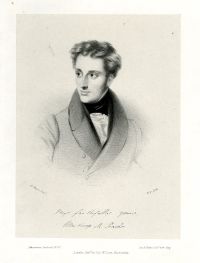
“ Winthrop Mackworth Praed was the third and youngest son of William Mackworth Praed, serjeant-at-law, who was the first chairman of the Audit Board, a post which he filled for many years.{12} He was born on the 26th July 1802, at 35 John Street, Bedford Row, his father’s London residence, although Bitton House, at Teignmouth, the country seat of the family, was always regarded as his paternal home. ”
Winthrop Mackworth Praed,
The poems of Winthrop Mackworth Praed…
(1886)
“ Winthrop Mackworth Praed, most precocious and most prolific of the poets of society, began his literary career as a schoolboy, and for twenty years flooded the periodical literature of his day with songs and satires, ballads and legends innumerable, all of which are forgotten. It is not quite fair, perhaps, to say all, for some half-dozen pieces at most survive, and have done duty with monotonous regularity, as representative specimens of his verse, in every volume of poetical selections of the Vers de Société order that has seen the light for the last quarter of a century. ”
Arthur Wing Pinero,
The Big Drum: A Comedy in Four Acts
“ Mackworth. Lady Filson. [After a pause.] Mackworth? Ottoline. Philip Mackworth. Lady Filson. [Dully.] Isn't he the journalist man you—you carried on with once, in Paris? Ottoline. What an expression, mother! Well—yes. Sir Randle. [Simply.] Good God! Ottoline. He doesn't write for the papers any longer. Lady Filson. W-what——? Ottoline. A novelist chiefly. Lady Filson. [Faintly.] Oh! Sir Randle. Successful? Ottoline. It depends on what you call success. Sir Randle. I call success what everybody calls success. Bertram. ”
