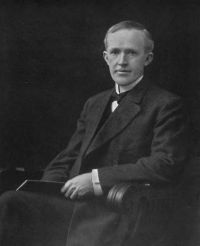
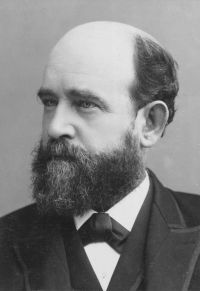
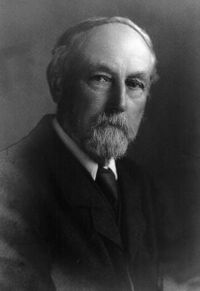
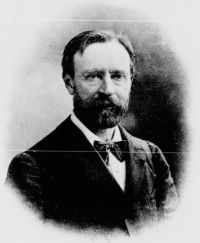
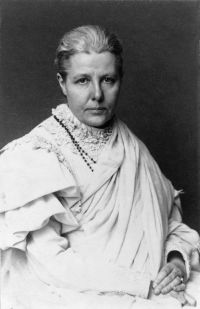
Malthusianism, a theory based on Thomas Malthus’s 18th-century observations, argues that population growth exceeds the availability of subsistence resources, resulting in unavoidable shortages. This idea has inspired a wide range of interpretations, from William Graham Sumner’s practical support for birth control as a personal moral obligation to Annie Besant’s criticism of Neo-Malthusianism as conflicting with spiritual values.
Critics such as Halliday Sutherland denounced Malthus’s “law of nature” as a rationale for poverty, while Leo Tolstoy highlighted its exploitation in reinforcing social inequalities. Writers like Hazlitt and Brailsford further challenged its strict numerical approach, portraying it as a means to suppress progressive ideas. These differing viewpoints illustrate Malthusianism as a debated framework through which economics, ethics, and social policy have been reinterpreted.
 William Graham Sumner,
What Social Classes Owe to Each Other
William Graham Sumner,
What Social Classes Owe to Each Other