“ She was, indeed, the persecuted damosel of mediæval romance, brought up to modern weight and size and standard—not the least of her many afflictions being that she was forcibly christened Mary Anne by heartless parents, while yet a helpless infant, and that nobody called her anything else. Her lips were full of prophetic utterances as to last straws; as to what certain people (not so very many miles away) would find for themselves one morning (not so very far ahead) when they got up and came downstairs, and said, "Where 's somebody?" ”
Mary Anne
Definition and stakes
The name "Mary Anne," a classic female given name, has been frequently referenced in literature as a symbol of diverse character archetypes. From the melancholic romanticism of Gertrude Bone’s The Post-Girl, where Mary Anne suffers through forced christening and prophetic anxiety, to the exploration of social dynamics in George W. M. Reynolds’ The Mysteries of London, where her emotional sensitivity contrasts with her unremarkable beauty, the name embodies a range of narratives.
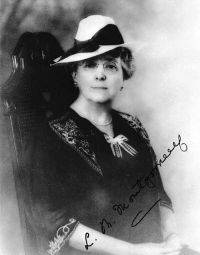
Emily Eden and L. M. Montgomery depict Mary Anne in domestic settings, highlighting familial ties and quiet endurance, while other authors, such as Marjorie Bowen, place her within stories of societal conflict. These varied portrayals underscore the name’s versatility across genres, reflecting both personal and cultural changes in literary representation.
Quotes about “Mary Anne”
 George W. M. Reynolds,
The Mysteries of London, v. 1/4
George W. M. Reynolds,
The Mysteries of London, v. 1/4
“ I may be married—or you yourself may marry—""Married!" ejaculated Mary-Anne: "do you think of marrying, then, Mr. Markham?""I am certainly attached to a young lady," replied Richard; "but there are circumstances which—""You are attached to a young lady? Is she beautiful—very beautiful?""Very beautiful," answered Richard.Mary-Anne remained silent for some moments: she appeared to reflect profoundly. ”
George W. M. Reynolds,
The Mysteries of London, v. 1/4
“ The animation of her countenance was on those occasions radiant and brilliant in the extreme:—a spectator could have snatched her to his arms and embraced her fondly,—not with a single gross desire—not with the shadow of an unhallowed motive; but, in the same way as a man, who, being a parent himself, is attached to children, suddenly seizes upon a lovely little boy or girl of two or three years old, and covers its cheeks with kisses.Mary-Anne was by no means beautiful—not even pretty; and yet there was something altogether unearthly in the whole character and expression of her countenance. ”