Mass (liturgy)

Definition and stakes

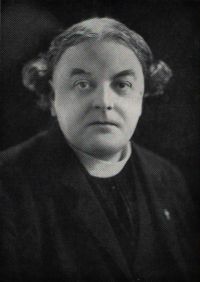
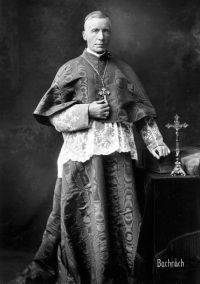
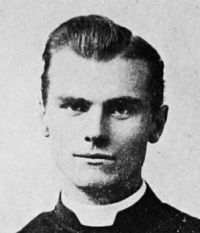
Portrait of John Francis Goggin John Francis Goggin,  Catholic Encyclopedia (1913)

“ Among the liturgical functions, the celebration of Mass, or of the Holy Eucharist, occupies the most important place. Although the early writers speak in a guarded manner concerning these sacred mysteries, still they give much precious information on the liturgy of their age. The Mass seems to have been divided into the Mass of the catechumens, and the Mass of the faithful, and among the orthodox Christians the catechumens were rigidly excluded from assisting at the sacrifice proper. ”
Source: Wikisource

Mrs. J. Sadlier,  Purgatory: Doctrinal, Historical…

“ That the practice of praying for the dead has descended from apostolic times is also evident from the Liturgus of the Church. A Liturgy is the established form of public worship, containing the authorized prayers of the Church. The Missal, or Mass-book, for instance, which you see on our altars, contains a portion of the Liturgy of the Catholic Church. ”
Source: Gutenberg

J. H. Kurtz,  Church History (Volumes 1-3)

“ The sinner in need of redemption comes to the altar of the Lord, seeks and finds quickening and instruction, forgiveness and grace. The real pillar of the whole service is therefore the word, and to the symbol is assigned only the subordinate part of accompanying the word with a pictorial representation. The components of the liturgy are partly such as invariably are repeated in every Mass, partly such as change with the calendar and the requirements of particular festivals. Among the former the canon of the Mass forms the real centre of the whole Mass. ”
Source: Gutenberg

Get perspective with Kwize: daily news enlightened by great literature