Melusine

Definition and stakes

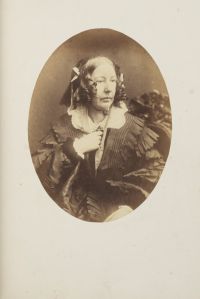
Portrait of Louisa Stuart Costello Louisa Stuart Costello Béarn and the Pyrenees

In 1575 the castle was razed, by order of the Duke de Moutpensier, and for several nights previous to its demolition, Melusine startled the country round with her piercing cries. It is even said that certain ancient women in Lusignan hear her occasionally; but we were not so fortunate as to meet with any who had been so favoured.
Bouchet, in his chronicle, acknowledges himself greatly puzzled to account for the legend of Melusine; for, though he does not hesitate to believe anything advanced by the Church, he does not feel bound to put entire faith in a book of romance.
Source: Gutenberg

Portrait of Letitia Elizabeth Landon Letitia Elizabeth Landon Letitia Elizabeth Landon (1834)

The fountain fairy—Melusine!*
⁠* Raymond, first Lord of Lusignan, died as a hermit, at Monserrat. Melusina's was a yet harsher doom: fated to flit over the earth, in pain and sorrow, as a spectre. Only when one of the race of Lusignan was about to die, does she become visible,—and wanders wailing around the Castle. Tradition also represents her shadow as hovering over the Fountain of Thirst.—Thomas's Lays and Legends.
Source: Wikisource

1911 Encyclopædia Britannica, Volume 18… (1911)

MÉLUSINE, the tutelary fairy of the house of Lusignan, was the eldest daughter of the fairy Pressine, to avenge whose wrongs she shut up her father in a mountain in Northumberland. For this she was condemned to be metamorphosed every Saturday into a woman-serpent—that is, to be a serpent from the hips downwards. She might, however, be eventually saved from this punishment if she could find a husband who would never see her on a Saturday.
Source: Wikisource

Get perspective with Kwize: daily news enlightened by great literature