Mount Everest

Definition and stakes

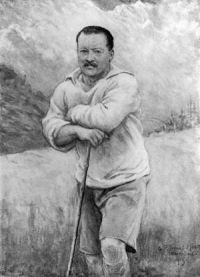
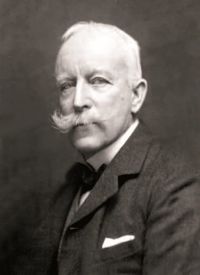
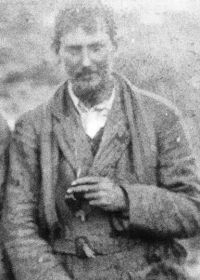
Portrait of Charles Howard-Bury Charles Howard-Bury,  Mount Everest, the Reconnaissance…

“ Now I was filled with the desire to lie here in this “oasis” and live at ease and sniff the clean fragrance of mountain plants. But we went on, on and up the long valley winding across a broad stony bay; and all the stony hillsides under the midday sun were alike monotonously dreary. At length we followed the path up a steeper rise crowned by two chortens between which it passes. We paused here in sheer astonishment. Perhaps we had half expected to see Mount Everest at this moment. ”
Source: Gutenberg

Portrait of Charles Howard-Bury Charles Howard-Bury,  Mount Everest, the Reconnaissance…

“ Mount Everest for its size is a singularly shy and retiring mountain. It hides itself away behind other mountains. On the north side, in Tibet, it does indeed stand up proudly and alone, a true monarch among mountains. But it stands in a very sparsely inhabited part of Tibet, and very few people ever go to Tibet. From the Indian side only its tip appears among a mighty array of peaks which being nearer look higher. Consequently for a long time no one suspected Mount Everest of being the supreme mountain not only of the Himalaya but of the world. ”
Source: Gutenberg

Portrait of Charles Howard-Bury Charles Howard-Bury,  Mount Everest, the Reconnaissance…

“ But climbing Mount Everest is no futile and useless performance of no satisfaction to anyone but the climbers. Results will follow from it of the highest value to mankind at large.
For the climbers are unwittingly carrying out an experiment of momentous consequence to mankind. They are testing the capacity of the human race to stand the highest altitudes on this earth which is its home. No scientific man, no physiologist or physician, can now say for certain whether or not a human body can reach a height of 29,000 feet above the sea.
”
Source: Gutenberg

Get perspective with Kwize: daily news enlightened by great literature