Oriel College, Oxford

Definition and stakes

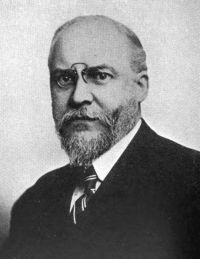
Portrait of George C. Brodrick George C. Brodrick,  A history of the University of Oxford (1900)

“ The system of tuition at Oriel was the best in Oxford, and as it was the first college to throw open its fellowships, it was able to attract the ablest of the young graduates. It was known that Oriel fellows were selected not merely on the evidence of the class-list, or by the results of competitive examination, but also by a discriminating, though arbitrary, estimate of their social qualities and probable intellectual development. ”
Source: Gutenberg

Osbert John Radcliffe Howarth,  1911 Encyclopædia Britannica, Volume 20… (1911)

“ The buildings of Oriel, which face Oriel Street, are not coeval with the foundation. The first quadrangle, with its elaborate battlements, dates from 1620–1637. The inner quadrangle has buildings of 1719, 1729 and later dates. The modern extension on Cecil Rhodes’s foundation faces High Street. Early in the 19th century a number of eminent men associated with Oriel gave the college its well known connexion with the “Oxford Movement.” Edward Copleston, elected fellow in 1795, became provost in 1814. ”
Source: Wikisource

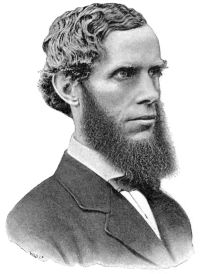
Portrait of Charles Alexander Harris Charles Alexander Harris,  Dictionary of National Biography… (1912)

“ Educated at King's College School, London, he obtained an exhibition at Oriel College, Oxford, in 1856, but next year migrated to Hertford College on winning a scholarship. He graduated B.A. in law and modern history in 1863, and became B.C.L. and M.A. in 1864. Studying for the bar, he was called of the Inner Temple on 26 Jan. 1867, and soon afterwards he went out to South Africa. ”
Source: Wikisource

Get perspective with Kwize: daily news enlightened by great literature