Prince of the Holy Roman Empire

Definition and stakes

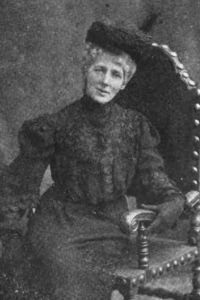
Portrait of Mercy Otis Warren Mercy Otis Warren The Sack of Rome — Act II

No superstitious dread should ere pervade The royal bosom of a Roman prince; Encircled deep by faithful veteran bands Who wait his fiat, and observe his nod, To feed his pleasures, or to blast his foes; To light the capitol, or guard the state, Or make the empire tremble at his frown. Valentinian
The noble Ætius, of princely birth, Possess'd a soul by Roman valour warm'd, That won the plaudits both of friends and foes; The legions lov'd---the citizens ador'd, And all will murmur at his sudden fall: Yet more I fear Petronius's rage, Than all the city, senators, or troops.
Source: Wikisource

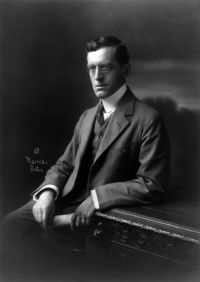
Frank Frost Abbott Roman politics (1923)

Feudalism inculcated the idea that each man owed allegiance to some one above him, the vassal to his lord, the lord to the prince, the prince to the Emperor, and it was only natural to complete the system by deriving the power of the Emperor from the Pope, whose responsibility was to God. This conception of the Pope as the ultimate source of authority throughout the world with his seat in Rome continued the tradition of the unity of the Roman Empire, which, as we shall soon see, was one of the most potent influences at work throughout the Middle Ages.
Source: Gutenberg

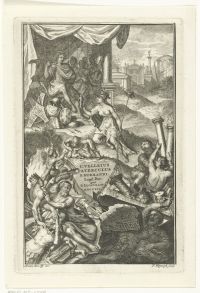
Portrait of Velleius Paterculus Velleius Paterculus Compendium of the History of Rome… (1852)

O all ye deities who have exalted the present magnitude of the Roman empire to a position of supremacy over the world, guard, preserve, and protect, I entreat and conjure you, in the name of the Commonwealth, our present state, our present peace, [our present prince [104] !] And when he shall have completed a long course on earth, grant him successors to the remotest ages, and such as shall have abilities to support the empire of the world as powerfully as we have seen him support it!
Source: Wikisource

Get perspective with Kwize: daily news enlightened by great literature